
Plus Size Pakistani Suits UK: A Real Styling Guide for Curvy Figures
Let's be honest about something first: a lot of "plus size styling guides" online are written by people who've clearly never had to actually shop this way. They tell you to "embrace your curves" and then move on without saying a single useful thing about cut, fabric weight, or where the seams actually sit. That's not what we're doing here.
We work with women of every size who come to us wanting Pakistani suits that feel as good as they look — not outfits that apologise for a body or try to hide it under yards of extra fabric. So this guide is the one we'd genuinely give a friend: which silhouettes work, which fabrics behave, and which small details make the biggest difference.
The Silhouettes That Actually Work
Not every cut in Pakistani fashion is created equal when it comes to fuller figures, and there's no shame in saying that plainly.
Anarkalis are, in our experience, one of the most consistently flattering options out there. The fitted bodice through the bust and the flared skirt from the waist down creates a natural hourglass line, and because the flare starts at the waist rather than the hip, it elongates rather than adds bulk. If you've been told Anarkalis "aren't for you," we'd genuinely push back on that.
A-line kameez are the other reliable winner. They skim rather than cling, which sounds like a small thing but changes how an outfit sits through a whole day of sitting, eating, dancing, whatever the occasion calls for. Straight-cut kameez can work too, but only if they're cut with enough ease through the hip — too fitted and they'll pull at the seams, too boxy and they'll add width you don't need.
Where we'd genuinely caution: very tightly fitted, body-con style kameez in stiff fabrics. They're less forgiving of movement, and a stiff fabric that doesn't have any give tends to show every seam line. It's not that curvy women "can't" wear fitted styles — it's that the fabric needs to have some stretch or drape to it, which brings us to the next point.
Fabric Matters More Than People Realise
This is the part most generic guides skip entirely, and it's genuinely one of the biggest factors in how an outfit actually falls on a fuller figure.
-
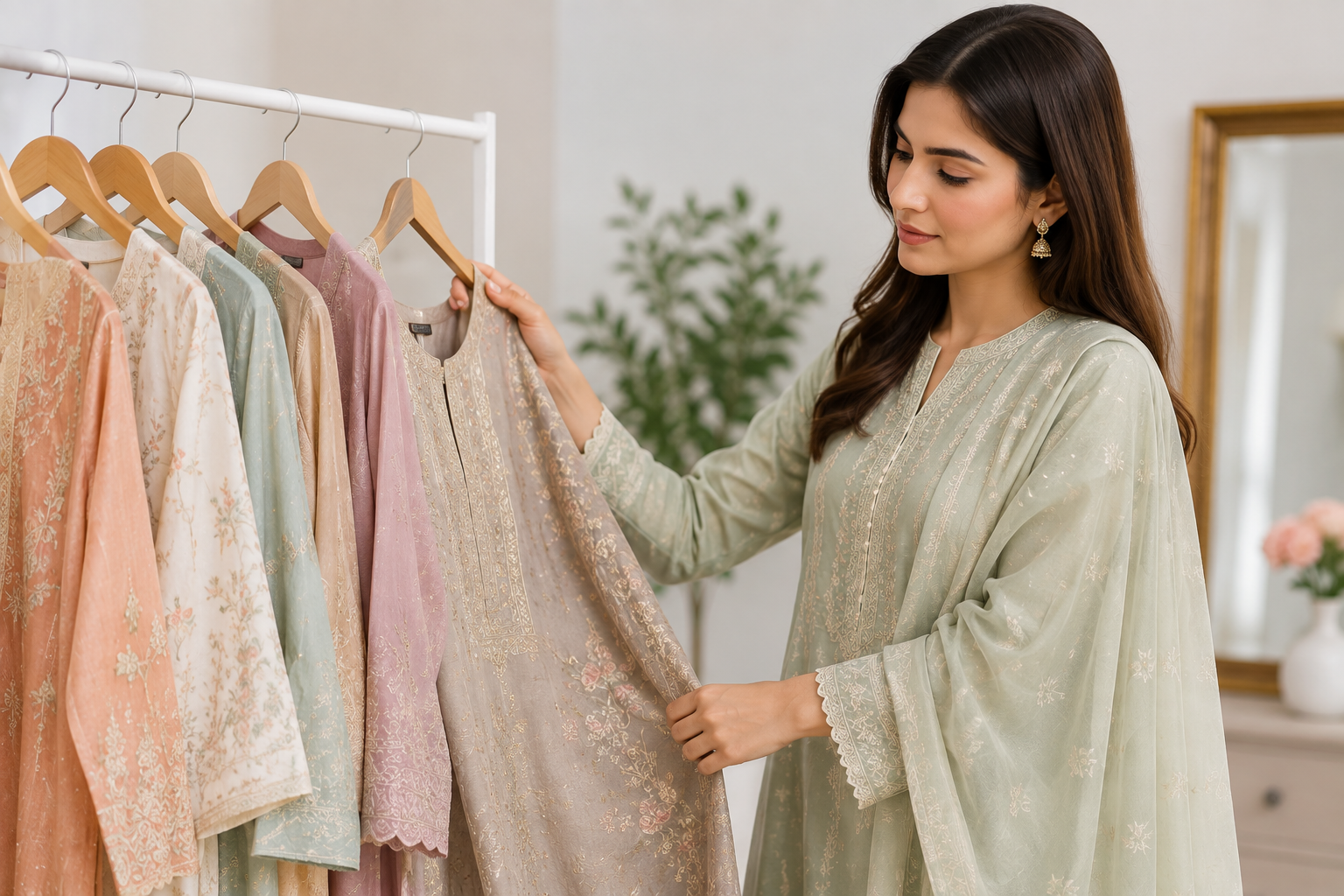
Georgette and chiffon drape beautifully and skim the body without clinging, which makes them a safe, flattering choice across almost every silhouette.
-
Lawn and cotton, while lovely for everyday wear, can feel stiffer depending on the weave, so look for a slightly finer weave if you want more movement.
-
Silk blends sit somewhere in the middle — enough structure to hold a shape, enough drape to move well.
-
Heavy velvet or dense embroidered fabric looks stunning but adds visual weight, so it's worth pairing with a more open, A-line cut rather than anything already fitted.
If you're custom-stitching a piece, this is exactly the kind of detail worth mentioning to your tailor upfront — fabric choice and cut need to work together, not against each other.
Colour and Print, Without the Clichés
You'll often read that curvy women should "stick to dark colours," and we think that advice is honestly a bit outdated. Rich jewel tones — emerald, sapphire, deep maroon, plum — do photograph beautifully and work for almost every occasion, but no rule says you can't wear a bold coral or a soft blush just as confidently.
Where print does matter is scale. A very small, busy print can look muddled from a distance, while a slightly larger, well-spaced print tends to read more clearly and elegantly. Vertical embroidery panels running down the front of a kameez also do genuinely help create a longer line, if that's a look you're going for — though plenty of women skip that entirely and just wear what they love, which is equally valid.
Getting the Fit Right (This Is the Real Secret)
Here's the thing almost nobody says out loud: the single biggest factor in how flattering an outfit looks isn't the silhouette or the colour. It's whether it's actually fitted to your measurements rather than a generic size label.
Ready-to-wear sizing in Pakistani fashion often stops at a Large or Extra Large, which simply doesn't reflect the full range of bodies that deserve beautiful clothing. This is exactly where custom stitching earns its keep. Our guide on how to measure yourself for a custom-stitched suit walks through every measurement we need, and once we have those numbers, the cut, ease and length are built around your actual body rather than an assumed "standard" one.
Occasion-by-Occasion Ideas
A few starting points, depending on what you're dressing for:
-
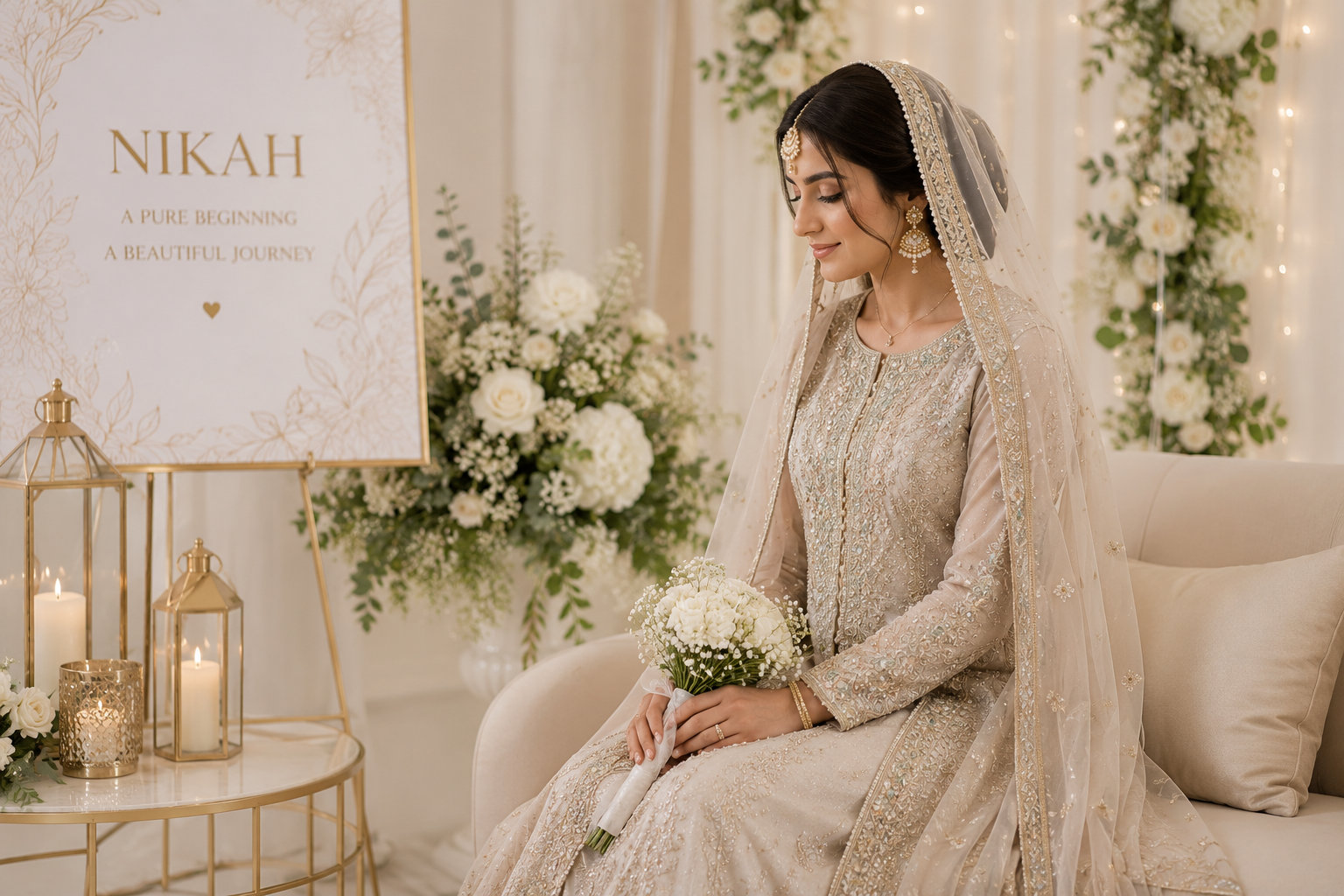
Wedding guest or formal event: an Anarkali or A-line suit in georgette or a silk blend, with embroidery concentrated on the bodice and hem rather than spread evenly across the whole garment.
-
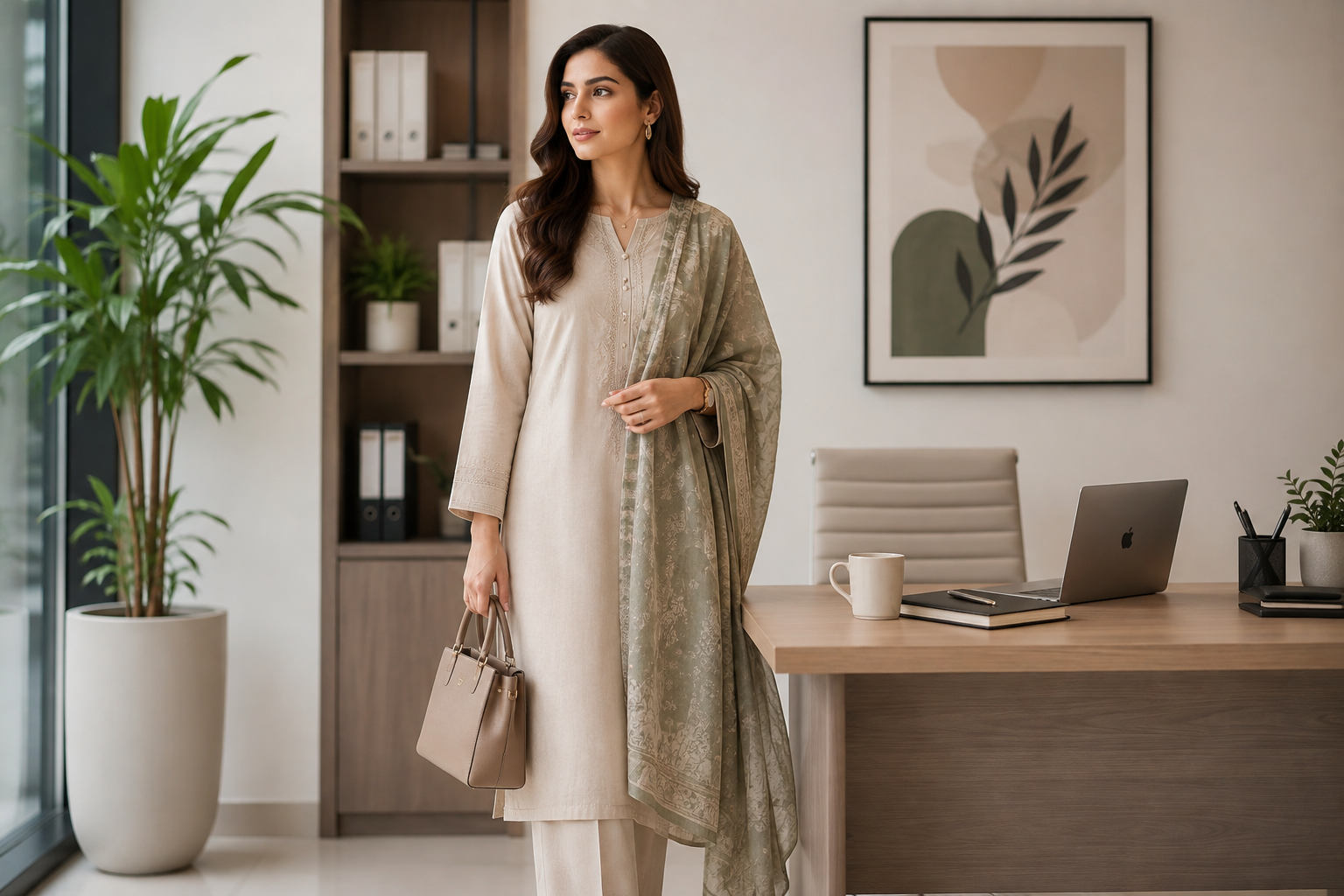
Everyday or office wear: a straight or A-line cotton kameez with trousers, kept simple and breathable.
-
Party wear: a flowier, flared kameez in a rich jewel tone, paired with a well-draped dupatta to add movement without adding bulk.
For wedding-specific pieces, our wedding outfits collection and luxury formals edit are both worth browsing, and for something with a bit more everyday ease, our casual kurta range has plenty of relaxed, A-line options.
A Quick Note on Dupattas
An often-overlooked detail: how you drape your dupatta genuinely changes the whole silhouette. A dupatta draped over both shoulders and left to hang can add visual width, while a single-shoulder drape, pinned neatly, tends to create a longer, cleaner line. If this is new territory for you, our guide on dupatta draping styles covers the options in more detail.
A Few Honest Mistakes We See Often
None of these are dramatic, but they add up, and they're easy to fix once you know to look for them.
Buying a size up "just in case" without checking the actual measurements. This is probably the most common one. A size chart's Large in one brand can be another brand's Extra Large, so going by the label alone rather than the inches listed often leads to a poorer fit than sizing correctly would have. Always check the chart, not just the letter.
Over-layering to "cover up." We understand the instinct, but stacking a shawl over a dupatta over a already-covered kameez tends to add bulk rather than disguise it. One well-chosen layer, in a fabric that drapes rather than sits stiffly, almost always looks more put-together than several.
Choosing embellishment placement without thinking about it. Heavy embroidery scattered evenly across an entire kameez can visually widen the torso. Concentrating it on the neckline, sleeves, or hem — and keeping the rest of the fabric plainer — tends to draw the eye in a more flattering direction without losing any of the glamour.
Skipping the sleeve length conversation. This one's small but genuinely matters. A sleeve that ends at the widest part of the upper arm can look less flattering than one that ends either just above the elbow or closer to the wrist. It's a five-second adjustment to mention when ordering, and it makes a real difference.
Where This Leaves You
If we could leave you with one thing, it's this: fit and fabric will always do more work than any styling "rule." A well-cut Anarkali in a fabric that drapes properly will outperform a stiff, ill-fitting piece in the "right" colour every single time.
Browse our full collection whenever you're ready, and if you're custom stitching and want a second opinion on cut or fabric before you order, just get in touch — we'd rather help you get it right than have you guess.
FAQs
1. What Pakistani Suit Styles Are Most Flattering for Plus Size Women?
Anarkalis and A-line kameez tend to be the most consistently flattering, since both create a natural, balanced silhouette without clinging. Straight-cut kameez can also work well if there's enough ease through the hip. Very fitted, stiff-fabric styles are generally the trickiest to get right.
2. Which Fabrics Work Best for Curvy Figures in Pakistani Suits?
Georgette, chiffon and silk blends drape well and move with the body rather than clinging to it, which makes them reliably flattering across most silhouettes. Heavier fabrics like velvet or dense embroidery look stunning but are best paired with a looser, A-line cut rather than a fitted one.
3. What Colours Should Plus Size Women Avoid or Embrace in Pakistani Fashion?
No colour's genuinely off-limits. Rich jewel tones like emerald, sapphire and maroon are consistently flattering and photograph beautifully, but soft or bright shades work just as well when the fit and fabric are right. Print scale matters more than colour — a slightly larger, well-spaced print usually reads more elegantly than a very busy small one.
4. Are Anarkalis Good for a Fuller Figure?
Yes, genuinely one of the best options. The fitted bodice through the bust combined with a flare starting at the waist creates a natural, elongating silhouette, which is why Anarkalis are so consistently recommended for curvier figures.
5. Where Can I Find Plus Size Pakistani Suits in the UK?
Ready-to-wear sizing often tops out around Large or Extra Large, so custom stitching is usually the most reliable route for plus size shoppers, since the suit is cut to your actual measurements rather than a fixed label. Our wedding, formal and casual collections all offer this option alongside ready-to-wear pieces.

Leave a comment
This site is protected by hCaptcha and the hCaptcha Privacy Policy and Terms of Service apply.