
Nikah Outfit Ideas: What to Wear for Your Pakistani Islamic Wedding Ceremony (UK)
The nikah is a strange one to dress for, if we're being honest, because it doesn't get anywhere near the attention the barat does. Most of the wedding content out there is barat this, walima that, and the nikah — the actual Islamic marriage contract, the bit that legally and spiritually makes the marriage happen — gets treated almost as an afterthought. Which is a shame, because it deserves its own outfit, its own thought, and its own moment.
We've dressed a fair number of UK brides for their nikah, and one thing comes up again and again: people genuinely don't know whether to go big or keep it simple. So let's actually answer that, along with everything else worth knowing before you start shopping.
Nikah vs Barat: Why the Dress Code Is Different
The nikah is typically a smaller, more intimate, more religiously significant event than the barat. It's often held earlier in the day, sometimes at a mosque or at home, and the tone tends to be quieter — reciting vows, signing the contract, family gathered close rather than three hundred guests on a dance floor.
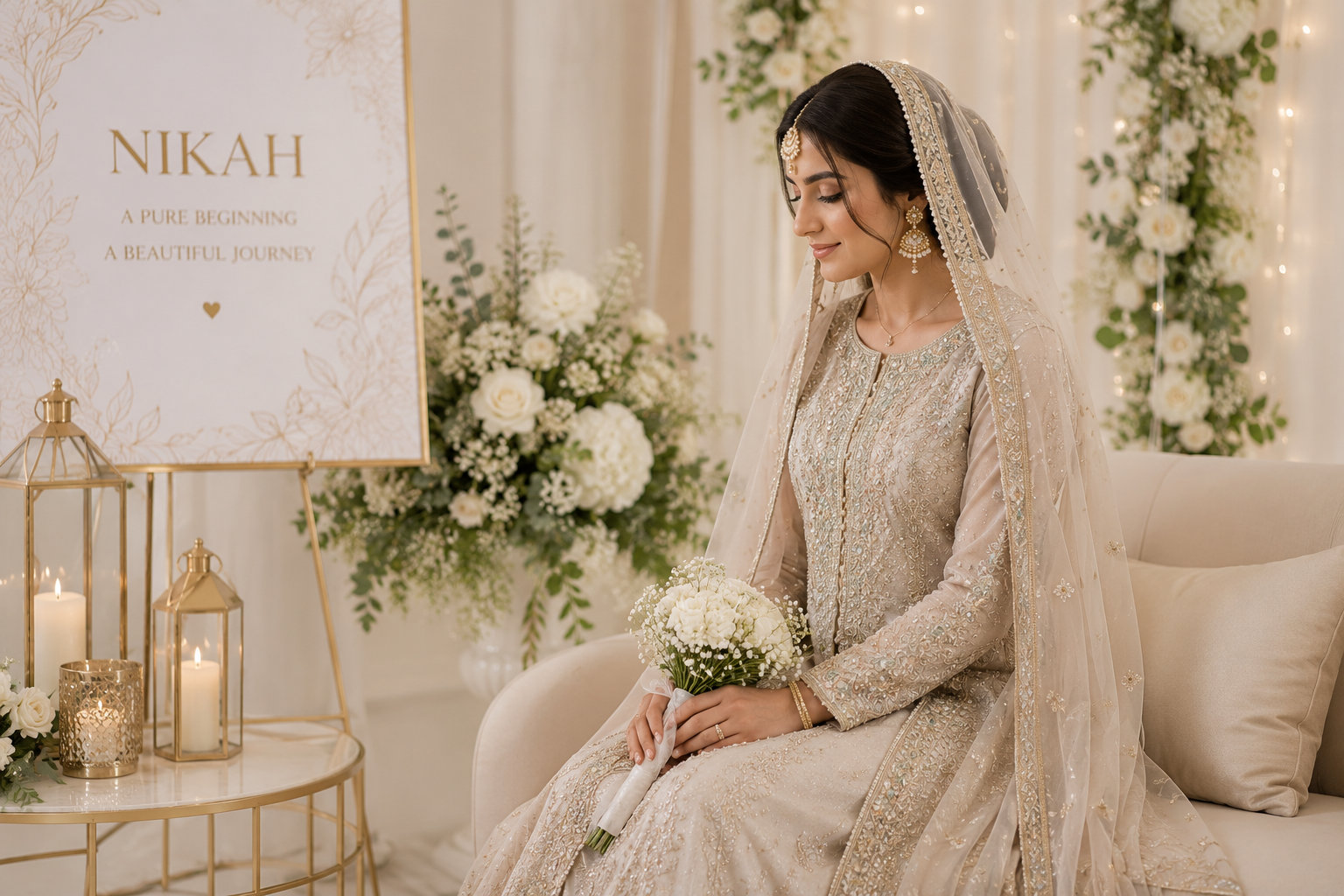
That shift in tone usually shows up in the outfit. Where a barat bride goes for maximum drama — heavy zardozi, deep red or maroon, a full lehenga or sharara set — a nikah outfit tends to lean lighter, both in colour and in embellishment. Think elegant rather than overwhelming. Chikankari, delicate resham work, and softer palettes like ivory, blush, pastel green or champagne are far more commonly seen at a nikah than the deep jewel tones and heavy metallic work saved for the barat.
That said, there's no rulebook carved in stone here. Plenty of modern UK brides do choose a more elaborate nikah outfit, especially if the nikah and walima are combined into one event, which happens more often than you'd think in British-Pakistani weddings where scheduling around venues and guests makes separate days harder to pull off.
What Nikah Brides Are Actually Wearing
A few directions we see working consistently well:
A beautifully embroidered shalwar kameez or Anarkali. This remains the most classic nikah choice, and for good reason — it strikes the balance between elegance and appropriate modesty for what's fundamentally a religious ceremony. Full sleeves, a higher neckline, and floor-length or near-floor-length hems all suit the occasion.
Chikankari suits. If you want something that photographs beautifully without looking heavy, chikankari is genuinely one of the best options for a nikah. The fine white-on-white or tonal thread work reads as refined and quietly luxurious rather than "trying too hard," which is often exactly the tone brides want for this part of the day. Our chikankari edit has some lovely options if this is the direction you're leaning.
Soft, lighter formals. For brides who want a bit more presence without going full bridal-heavy, a lighter formal suit in a soft jewel or pastel tone — think dusty rose, sage, powder blue — with moderate embroidery on the neckline and hem works beautifully. Our luxury formals collection is worth a browse for this exact in-between look.
Combined nikah-and-reception outfits. If your nikah is being held alongside a bigger reception on the same day, you may want something with a touch more formality — closer to what you'd wear to a walima. Our wedding outfits collection covers that fuller range, from lighter nikah-appropriate pieces through to more elaborate reception wear.
Colours: What's Traditional, What's Flexible
Ivory, off-white, and soft pastels carry particular meaning at a nikah — they're associated with purity and new beginnings, and they photograph exceptionally well against the more solemn, intimate setting of the ceremony itself. Green also has strong cultural resonance for nikah specifically, tied to notions of prosperity and good fortune.
That said, plenty of modern brides choose blush pink, champagne, soft gold, or even a muted jewel tone if that suits their personal style better. What's genuinely worth avoiding, culturally speaking, is red or deep maroon — those shades are traditionally reserved for the barat, and wearing them at the nikah can feel like jumping ahead to the wrong event. Black is best avoided entirely, given its association with mourning in South Asian culture.
What Guests Should Wear
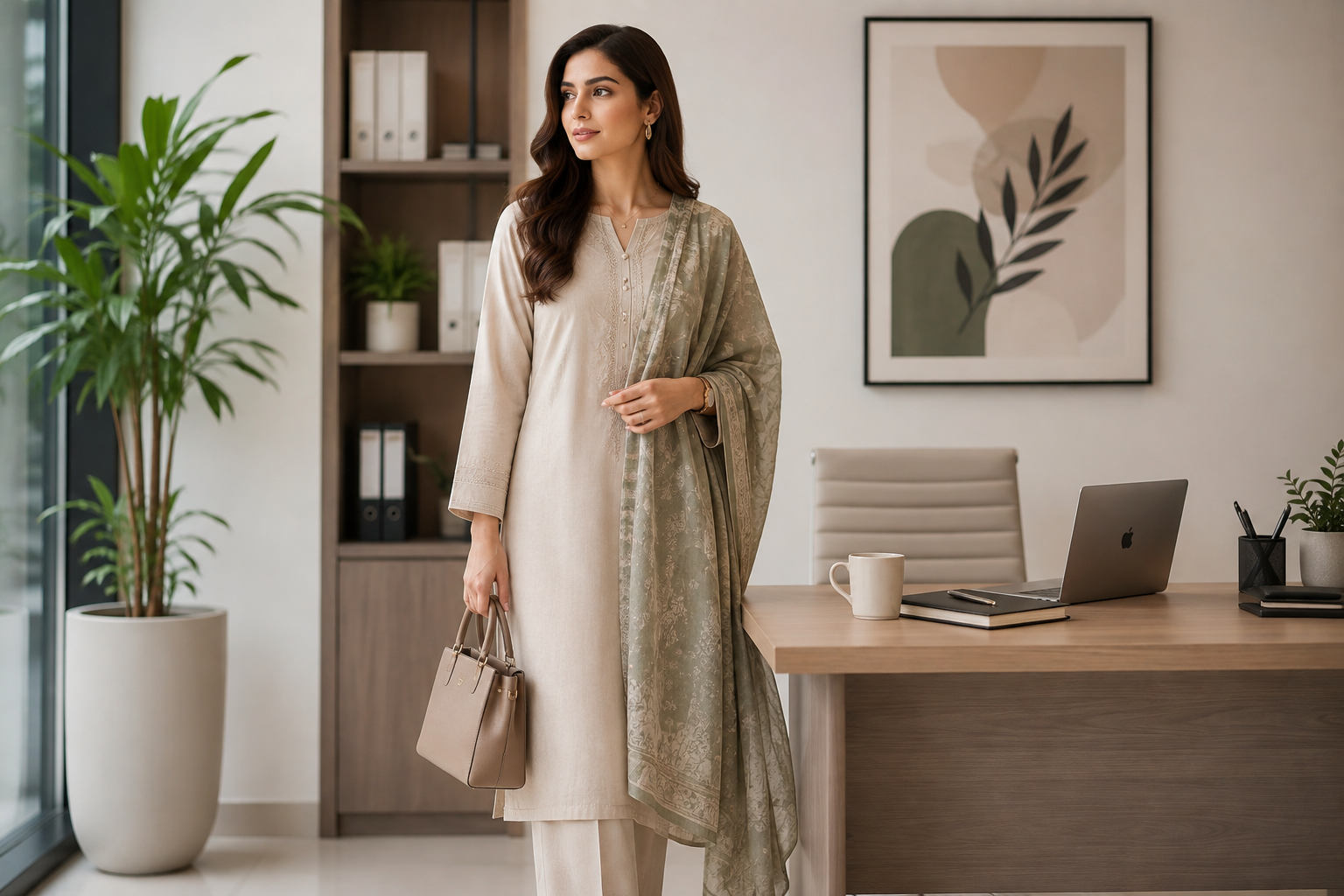
If you're attending someone else's nikah rather than being the bride, the dress code question gets asked constantly, and the honest answer is: dress respectfully, modestly, and a notch below what you'd wear to the barat. Full coverage matters more here than at almost any other wedding function — many nikah ceremonies take place partly or fully in a mosque setting, so long sleeves, a higher neckline, and a dupatta you can use to cover your head if needed are genuinely worth having on hand.
A modest, elegant shalwar kameez or Anarkali in a soft colour is the safest and most appropriate choice. If you'd like more guidance on modest silhouettes generally, our modest wear collection is a good starting point.
Fabric Choices That Suit a Nikah
Because nikahs are often daytime or early-evening events, and because the tone leans lighter, fabric choice matters more than people expect. Chiffon and georgette drape elegantly for a more formal look without adding heaviness. Cotton and lawn work well for a warmer-weather or more casual nikah. If your nikah is combined with a bigger evening reception, a light-to-medium weight silk blend gives you a bit more structure and shine without tipping into full bridal-weight fabric.
Nikah, Walima and Barat at a Glance
If you're new to planning around these three functions, or dressing for someone else's wedding and unsure how they differ, this quick comparison helps:
|
Function |
Typical Tone |
Colours |
Fabric Weight |
|
Nikah |
Intimate, religious |
Ivory, pastel, soft green |
Light to medium |
|
Barat |
Grand, celebratory |
Red, maroon, jewel tones |
Heavy, richly embroidered |
|
Walima |
Formal reception |
Softer jewel tones, gold, blush |
Medium to heavy |
Seeing them side by side makes it much easier to understand why a nikah outfit that looks "too simple" next to a barat lehenga is actually doing exactly what it should.
Accessorising Without Overdoing It
Because the outfit itself tends to be lighter, jewellery for a nikah usually follows the same principle — refined rather than heavy. A delicate gold or kundan set, simple jhumkas, and a light dupatta draped over the head or shoulders (many brides use it as a soft head covering during the ceremony itself) complete the look without competing with it. Save the statement choker and the heavier polki sets for the barat, where the outfit is built to carry that level of embellishment.
Getting the Fit Right
Because a nikah outfit tends to be more fitted and refined than a heavily layered barat lehenga, getting your measurements right matters more here, not less. Our guide on how to measure yourself for a custom-stitched suit is worth reading before you order, especially if you're going for a fitted Anarkali or straight-cut kameez where the silhouette needs to sit precisely.
Bringing It Together
If there's one thing we'd want every nikah bride and guest to walk away with, it's this: the nikah doesn't need to compete with the barat, and it shouldn't try to. It's a different moment with a different tone, and the outfit should reflect that — elegant, a little quieter, genuinely beautiful without shouting for attention.
Browse our full collection whenever you're ready to start looking, and if you want a second opinion on what suits your specific nikah setting, we're always happy to help.
FAQs
1. What Should a Bride Wear for Her Nikah Ceremony?
Most nikah brides choose a beautifully embroidered shalwar kameez, Anarkali, or chikankari suit in a soft colour like ivory, blush, or pastel green, with fuller sleeves and modest coverage. It tends to be lighter and more refined than a barat outfit, reflecting the more intimate, religious tone of the ceremony.
2. Is Nikah More Formal or Less Formal Than a Barat?
Generally less formal in terms of embellishment, though it's still a significant occasion. The nikah tends to be a smaller, more intimate event with a quieter dress code, while the barat is the main, most elaborately dressed event of the wedding. If the two are combined into one day, the outfit can lean slightly more formal.
3. What Colours Are Traditional for a Nikah Outfit?
Ivory, off-white, soft pastels, and green all carry traditional significance for a nikah, symbolising purity and new beginnings. Red and deep maroon are usually avoided, as they're culturally reserved for the barat, and black is best avoided entirely due to its association with mourning.
4. Can Guests Wear the Same Outfit to Nikah as They Would to a Barat?
It's better not to. Nikah dress codes lean more modest and understated, often with a mosque setting involved, so guests should choose fuller coverage and a slightly lighter outfit than they'd wear to the barat, which is typically the most elaborately dressed event of the wedding.
5. What Fabric Works Best for a Nikah Dress?
Chiffon and georgette suit a more formal nikah with elegant drape, while cotton and lawn work well for a warmer or more casual setting. If your nikah is combined with an evening reception, a light-to-medium silk blend offers more structure and shine without the full weight of bridal fabric.

Leave a comment
This site is protected by hCaptcha and the hCaptcha Privacy Policy and Terms of Service apply.