
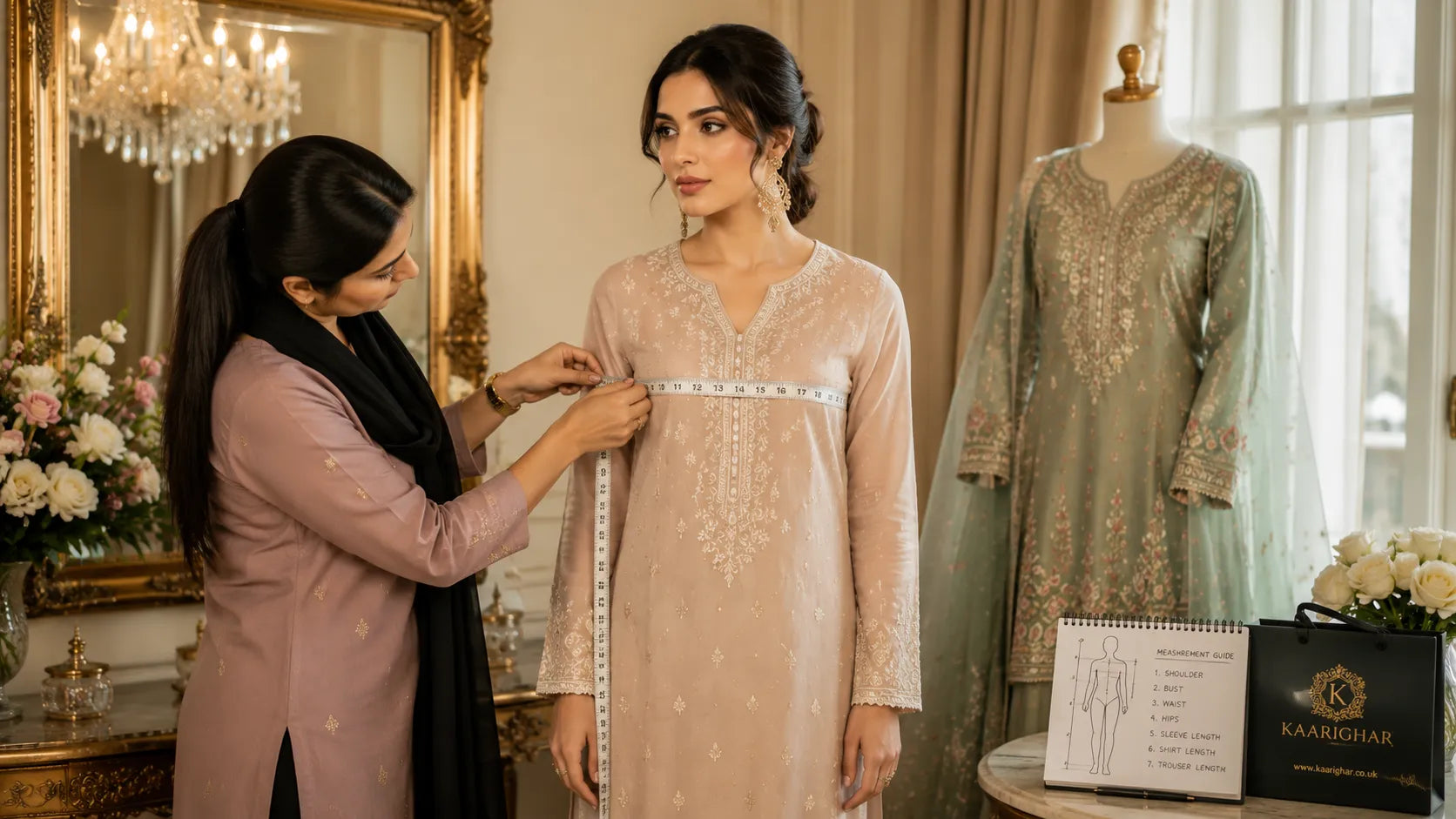
How to Measure Yourself for a Custom-Stitched Pakistani Suit: A Complete UK Guide
There is nothing quite like slipping into a Pakistani suit that fits you perfectly the kameez sitting exactly where it should, the shalwar falling with just the right flare, the whole outfit feeling like it was made for you. Because, when you order custom stitching, it was. The single biggest factor that decides whether your stitched suit looks flawless or slightly off is not the fabric or the embroidery. It is your measurements.
At Kaarighar, we stitch hundreds of suits for customers across the UK, and we have learned that a few careful minutes with a tape measure save days of disappointment later. So we have put together this complete guide on how to measure for a stitched Pakistani suit, covering every number our tailors need from bust, waist and hips to kameez length, ghera and trouser length.
Why Accurate Measurements Matter
When you buy from a high-street shop, you try before you buy. When you order a stitched Pakistani suit online, our tailors work only from the numbers you send us. Even a difference of an inch or two changes how a kameez drapes across your shoulders or how comfortably a shalwar sits at your waist.
Getting your measurements right delivers three clear benefits:
-
A flattering fit that works with your figure rather than against it.
-
No local alterations, which saves you time and extra cost once your parcel arrives.
-
Fewer returns, so your favourite design becomes a wardrobe staple instead of a near miss.
If you are still deciding between buying stitched or ordering fabric to be tailored, our guide on the difference between unstitched and ready-to-wear is a helpful place to start before you pick up the tape.
What You'll Need Before You Start
Preparation makes the whole process quicker and far more accurate. Before you begin, gather these essentials:
-
A soft fabric measuring tape (the flexible tailor's kind, not a stiff metal one).
-
A notepad and pen to record each number straight away.
-
A mirror, and ideally a friend to help with the shoulder, back and armhole.
-
Thin, well-fitting undergarments to measure over.
A few ground rules our stitching team swears by: stand naturally with relaxed shoulders, keep the tape snug but never tight, and always measure twice. If two readings differ, take a third.
Your Complete Measurement Checklist

Here are the core measurements we need, how to take each one, and why it matters:
|
Measurement |
How We Take It |
Why It Matters |
|
Bust (chest) |
Around the fullest part, tape level all the way round |
Defines the fit of the kameez |
|
Waist |
Around the narrowest point, ~1 inch above the navel |
Anchors both shirt and trouser |
|
Hips |
Around the fullest part, ~8–9 inches below the waist |
Ensures a smooth drape, no pulling |
|
Shoulder |
Straight across the upper back, tip to tip |
Sets how the kameez sits on top |
|
Sleeve length |
Shoulder edge down the arm to desired point |
Controls wrist, elbow or ¾ sleeves |
|
Kameez length |
Shoulder, over the bust, to the desired hem |
Decides the overall silhouette |
|
Neckline depth |
Base of neck down to preferred front/back depth |
Shapes the neckline style |
|
Trouser length |
Natural waist straight down to the hemline |
Prevents pooling or short hems |
|
Ankle / ghera |
Around the ankle and across the flared hem |
Sets the shape of the shalwar |
Because different silhouettes flatter different figures, it is worth reading our advice on choosing a Pakistani suit for your body shape alongside your measurements the right cut and the right numbers work together.
Measuring the Kameez and the Shalwar
The kameez is the star of the outfit. Measure the shirt length from the top of your shoulder, straight down over the bust, to exactly where you want the hem to fall and remember to allow for your heel height on longer, formal styles. For custom necklines, measure the depth you want at both the front and the back.
The shalwar or trousers need your waist and hip numbers plus the trouser length (measured while wearing your event shoes) and the ankle circumference for a neat cuff.
If you love the idea of longer, elegantly stitched shirts, you will find plenty of inspiration among our ready-to-wear luxury pret styles, which showcase the cuts we can tailor to your size.
Understanding Ghera and Style-Specific Measurements
One measurement unique to South Asian tailoring often confuses first-time shoppers: the ghera, or the flare width at the hem of the trouser or shirt. The ghera determines the whole silhouette a wide ghera gives a flowing, dramatic sweep, while a narrow one creates a sleek, fitted line.
Certain styles also need their own extra measurements:
-
Ghararas and mermaid cuts need a waist-to-knee measurement.
-
High necks and stand collars need a head circumference so the garment slips on easily.
-
Fitted silhouettes benefit from a snug armhole and bicep measurement.
Whenever you order a special silhouette, simply tell us the style and we will guide you on exactly which extra numbers we need. Whether you choose a 2-piece or a 3-piece suit will also affect how the dupatta and extra pieces factor into your final look.
Custom-Stitched vs Standard Ready-to-Wear
Not sure whether to order custom stitching or a standard ready-made size? Here is a quick comparison to help you decide:
|
Feature |
Custom-Stitched (Your Measurements) |
Standard Ready-to-Wear |
|
Fit |
Tailored exactly to you |
Fixed S / M / L sizing |
|
Best for |
Non-standard figures, perfect drape |
Quick buys, standard sizes |
|
Turnaround |
Slightly longer (stitching time) |
Ships ready to wear |
|
Alterations |
Rarely needed |
May need a local tailor |
|
Returns risk |
Low with accurate measurements |
Higher if you are between sizes |
For most of us who fall between standard sizes, custom stitching is the reliable route to a flawless fit provided the measurements are accurate.
Common Measurement Mistakes to Avoid
The errors we see most often are easy to sidestep:
-
Measuring over thick clothing, which adds phantom inches.
-
Pulling the tape too tight, producing a restrictive suit.
-
Guessing the kameez length instead of measuring against your body.
-
Forgetting heel height, leaving trousers too long or too short.
A careful five minutes now prevents every one of these.
From Measurements to Your Doorstep
Once you have your numbers, ordering is simple. Choose your design, select custom stitching, and send us your measurements telling us clearly whether you prefer a fitted or a relaxed fit, since we add appropriate loosening for comfort.
If you have left it late for an event, our next-day delivery service helps you receive a beautifully finished suit in a hurry, and you can browse our full collection or shop by category to find the perfect starting point. Prefer something already stitched? Explore our stitched Pakistani suits and our guide to finding the perfect 3-piece stitched suit online.
If you are ever unsure about a measurement, contact our customer care team before you order rather than after. And in the rare event that something is not quite right, our returns and refunds policy is there to make things simple.

FAQs
1. What Measurements Do I Need to Give for a Custom-Stitched Pakistani Suit?
For most stitched suits we need your bust, waist and hips, plus your shoulder width, sleeve length, kameez (shirt) length, neckline depth, trouser length and ankle width. For special silhouettes such as ghararas or high necks, we may also ask for a waist-to-knee or head measurement. When in doubt, send everything you have and we will confirm the rest.
2. How Do I Measure Myself at Home for a Salwar Kameez?
Use a soft measuring tape over thin, well-fitting clothing, stand relaxed with good posture, and keep the tape snug but never tight. Take your bust, waist and hips first, then your shoulder, sleeve and lengths. Ask someone to help with the shoulder and armhole, write each number down straight away, and measure twice to be sure.
3. What Is Ghera and Why Does It Matter?
Ghera is the width of the flare at the hem of your shirt or trousers. It shapes the entire silhouette of the outfit a wider ghera creates a flowing, dramatic look, while a narrower ghera gives a slim, modern line. Telling us your preferred ghera helps us stitch the exact look you have in mind.
4. Should I Size Up When Ordering a Stitched Pakistani Suit?
If you are between sizes or unsure, we generally recommend allowing a little extra room, especially around the bust and hips, since it is easier to take a garment in than to let it out. That said, we add standard loosening for comfort during stitching, so follow our size chart rather than guessing, and tell us if you prefer a fitted or relaxed fit.
5. What if My Stitched Suit Doesn't Fit When It Arrives?
Accurate measurements make this rare, but if something is not right, get in touch with our customer care team and review our returns and refunds policy for the available options. Sharing clear measurements and your fit preference at the time of ordering is the best way to make sure your suit arrives exactly as you imagined.

Leave a comment
This site is protected by hCaptcha and the hCaptcha Privacy Policy and Terms of Service apply.