
Pakistani Embroidery Types Explained: Zardozi, Gota, Resham, Dabka & Tilla
We get asked "what kind of embroidery is this?" more than almost any other product question, and it's a genuinely fair thing to want to know. When you're paying good money for a beautifully embellished suit, understanding what you're actually looking at and what makes one technique take three days and another take three weeks changes how you shop, not just how much you appreciate the finished piece.
So here's the guide we wish existed when we first started paying proper attention to this ourselves: the major embroidery techniques you'll come across in Pakistani fashion, what they actually look like, and which occasions each one genuinely suits.
Zardozi: The Heaviest Hitter
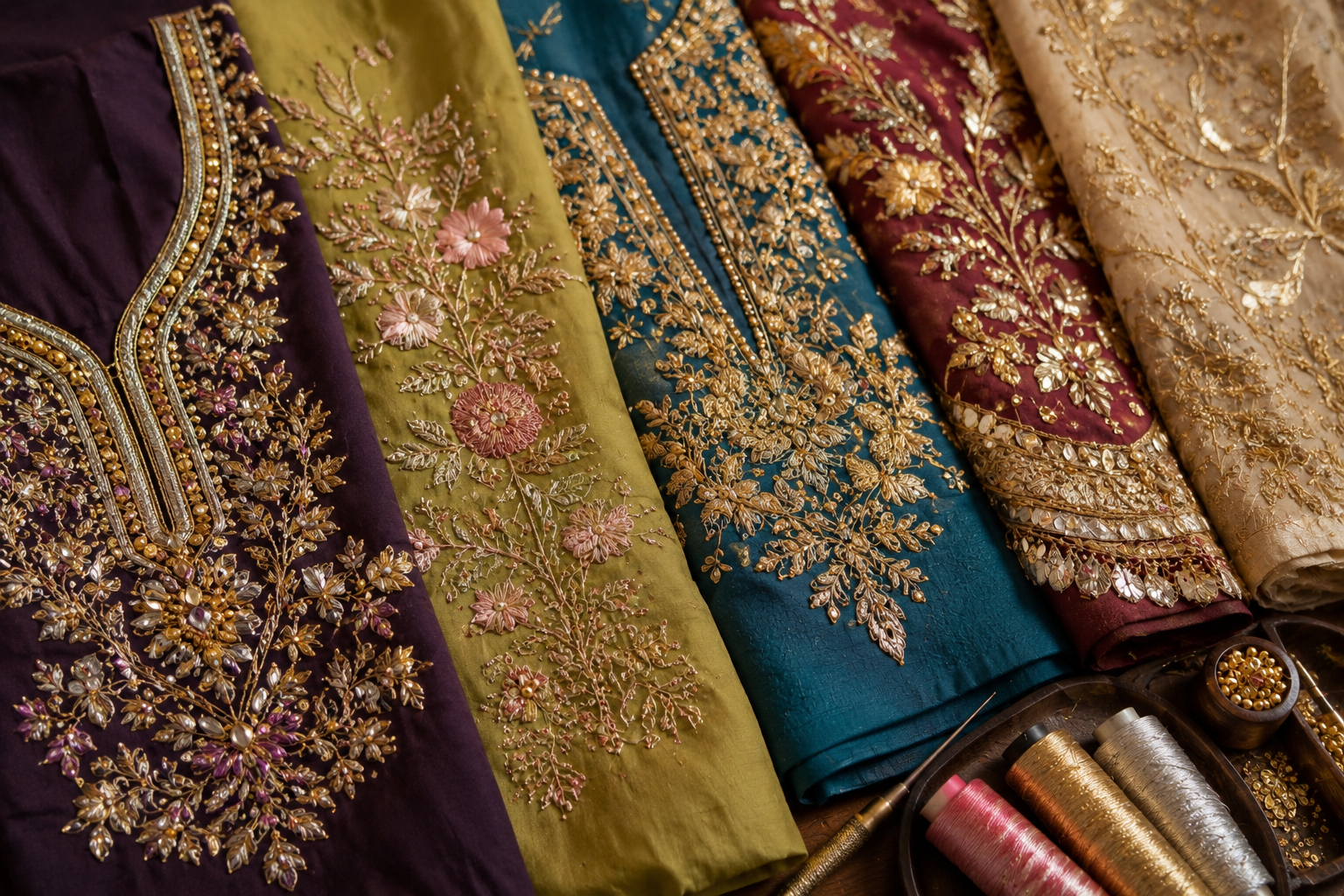
Zardozi is probably the technique most people picture when they think "elaborate Pakistani embroidery." The name comes from Persian zar meaning gold, dozi meaning embroidery and it lives up to that heritage. Traditional zardozi uses metallic threads, wire, sequins and sometimes semi-precious stones to build raised, three-dimensional motifs that genuinely sit on top of the fabric rather than lying flat against it.
This is bridal-weight embroidery in every sense. It takes real time, real skill, and it's heavy both physically and visually, which is exactly why it's the classic choice for a barat outfit rather than something you'd wear to the office. If you're shopping for this level of embellishment, our luxury formals collection has pieces built around this kind of statement work.
Gota Patti: Lighter, Geometric, Genuinely Versatile
Gota patti works with folded strips of metallic ribbon, cut and stitched into geometric or floral shapes rather than built up in raised layers the way zardozi is. The result is still shimmery and eye-catching, but noticeably lighter both literally and visually which makes it a favourite for mehndi outfits and daytime festive wear where you want sparkle without the weight of a full bridal piece.
It's also, in our experience, one of the more time-intensive techniques despite looking lighter than zardozi. Each individual shape is cut and folded by hand before it's stitched down, and a densely worked gota piece can genuinely take weeks.
Resham: Silk Thread, Year-Round Elegance
Resham simply means silk in Urdu, and resham embroidery refers to any embellishment done with silk thread rather than metallic materials. This is probably the most versatile technique on this list it works beautifully for delicate floral sprays on a summer lawn suit and equally well for denser, all-over coverage on something more formal.
Because it doesn't rely on metallic thread, resham has a softer, more lustrous look rather than a shimmering one, and it genuinely suits year-round wear in a way zardozi and heavier metallic work don't. If you want embellishment without heaviness, this is often the right starting point.
Dabka: Refined Metallic Work, One Notch Below Zardozi
Dabka uses coiled metallic wire stitched onto the fabric, giving a raised, textured effect that reads as elegant metallic shimmer without the full weight and drama of zardozi. Think of dabka as the more wearable middle ground refined enough for a nikah or an engagement, without tipping into full bridal territory.
It's often combined with resham thread work for a lighter, more layered look, which is genuinely one of our favourite combinations for luxury pret pieces. Our luxury pret edit has several suits that pair dabka detailing with softer resham work in exactly this way.
Tilla: Flat, Uniform, Quietly Formal
Tilla work uses flat metallic ribbon laid directly onto the fabric surface and secured with small stitches at intervals, rather than the raised, three-dimensional build of zardozi. The finished effect is smoother and more uniform flat, reflective embroidery that catches light evenly rather than the more varied glimmer of raised metallic work.
It's commonly used for borders, geometric patterns, and outlining larger motifs, and it pairs particularly well with heavier winter fabrics like velvet, where the flat metallic sheen contrasts beautifully against the fabric's depth.
Chikankari: Delicate, White-on-White, Understated
Chikankari deserves its own mention here because it's genuinely a different category of embroidery altogether fine, often white-on-white or tonal thread work that's subtle rather than showy. It originated as a delicate hand-embroidery tradition and remains one of the most elegant, quietly luxurious techniques in Pakistani fashion, particularly well suited to warmer weather and daytime formal events like a nikah.
Our chikankari collection is a good place to see this technique properly, since photographs genuinely undersell how refined it looks in person.
Which Embroidery Suits Which Occasion
A rough guide, though there's plenty of room to mix and match depending on personal taste:
|
Occasion |
Best-Suited Embroidery |
|
Barat / bridal |
Zardozi, tilla |
|
Mehndi |
Gota patti, resham |
|
Nikah |
Chikankari, dabka |
|
Everyday / summer wear |
Resham, light gota |
|
Winter formal |
Tilla, dabka on velvet |
How to Tell Handmade Work from Machine Embroidery
This comes up constantly, and it's worth knowing since it genuinely affects both price and how a piece ages. Handmade zardozi and gota work tend to show small, individual thread ends tied off at the back rather than a continuous line, along with slight, natural irregularities between motifs that are meant to look identical a hallmark of real handwork rather than a flaw. Machine embroidery, by contrast, is generally more uniform throughout, with continuous stitching on the reverse and, often, a visible white stabiliser thread holding everything in place.
Neither is inherently "better" for every use case machine work is faster and more affordable, and for everyday or lighter pieces, that's genuinely a sensible trade-off. But for bridal-weight zardozi or tilla specifically, handwork tends to hold its shape and finish for far longer.
Getting the Fit Right for Heavily Embroidered Pieces
Embellished fabric behaves differently to plain cloth when it's being cut and stitched, since the embroidery itself adds weight and reduces flexibility. If you're custom stitching a heavily worked piece, it's worth mentioning the embroidery placement to your tailor upfront, since it can affect where seams sit most comfortably. Our guide on how to measure yourself for a custom-stitched suit covers the measurements we need regardless of embellishment level.
Caring for Embroidered Pieces
Different techniques need different care, and it's worth knowing before your first wash rather than after. Metallic work like zardozi, dabka and tilla should never go anywhere near a washing machine, and dry cleaning is genuinely the only safe option for anything heavily embellished. For the fuller picture on handling embroidery, colour bleeding, and fabric-specific washing, our guide to washing and caring for Pakistani suits is worth reading before that first wash.
The Short Version
Understanding these techniques genuinely changes how you shop. You'll know why one suit costs noticeably more than another that looks similar at a glance, and you'll be able to choose the right embellishment level for the occasion rather than guessing. Browse our full collection whenever you're ready, and if you want help identifying or choosing embroidery for a specific event, we're always happy to talk it through.
FAQs
1. What's the Difference Between Zardozi and Gota Patti?
Zardozi is heavy, raised, three-dimensional metallic embroidery built with wire, thread and sequins, making it the classic bridal choice. Gota patti uses folded strips of metallic ribbon stitched into flat geometric or floral shapes, giving a lighter, more versatile look suited to mehndi and daytime festive wear.
2. What Is Resham Embroidery Made Of?
Resham simply means silk, and resham embroidery refers to embellishment done with silk thread rather than metallic materials. It has a soft, lustrous finish rather than a shimmering one, and it works well year-round, from delicate summer florals to denser formal coverage.
3. Which Pakistani Embroidery Is Best for a Wedding Outfit?
For the barat, zardozi or tilla suit the occasion's grandeur best. For a nikah, chikankari or dabka offer refined elegance without heaviness. For mehndi, gota patti or resham strike the right festive, lighter balance for a more informal, high-movement event.
4. How Can I Tell If Embroidery Is Handmade or Machine Done?
Handmade work typically shows individual thread ends tied off at the back and slight, natural irregularities between motifs. Machine embroidery tends to be more uniform, with continuous stitching on the reverse and often a visible white stabiliser thread underneath.
5. What Is Dabka Work in Pakistani Suits?
Dabka uses coiled metallic wire stitched onto fabric to create a raised, textured metallic effect. It's often combined with resham thread work for a lighter, layered look, and it's a popular choice for nikahs and engagements where refined shimmer is wanted without full bridal-weight embellishment.

Leave a comment
This site is protected by hCaptcha and the hCaptcha Privacy Policy and Terms of Service apply.