
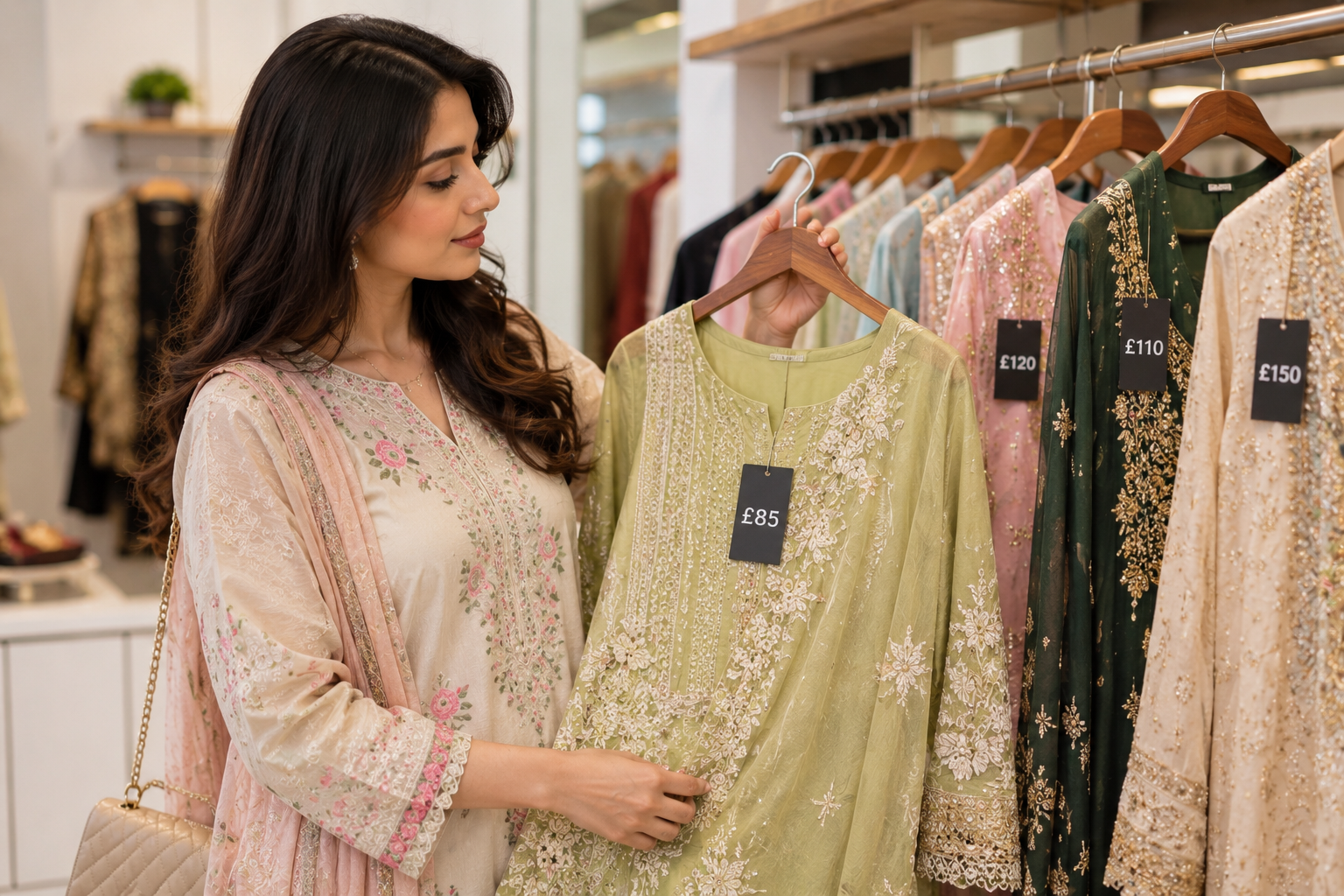
How Much Do Pakistani Suits Cost in the UK? A Buyer's Price Guide
This is one of those questions people ask us quietly, almost apologetically, as if it's slightly embarrassing to want to know before you buy. It really isn't. Pakistani suit prices in the UK swing wildly anywhere from around £30 for a simple printed lawn piece to several hundred pounds for a heavily embellished designer formal and without understanding what actually drives that gap, it's genuinely hard to know whether you're getting good value or just paying for a name.
So let's actually break this down properly, because "it depends" isn't a particularly useful answer on its own.
What Actually Drives the Price
A handful of factors do almost all the work here, and once you know them, price differences stop feeling arbitrary.
Fabric quality is the first and most obvious one. A basic printed lawn is genuinely cheap to produce, while a fine-weave luxury lawn, a proper silk blend, or a heavy velvet costs considerably more before a single stitch of embroidery is added. This alone can account for a large chunk of the price gap between an everyday suit and a formal one.
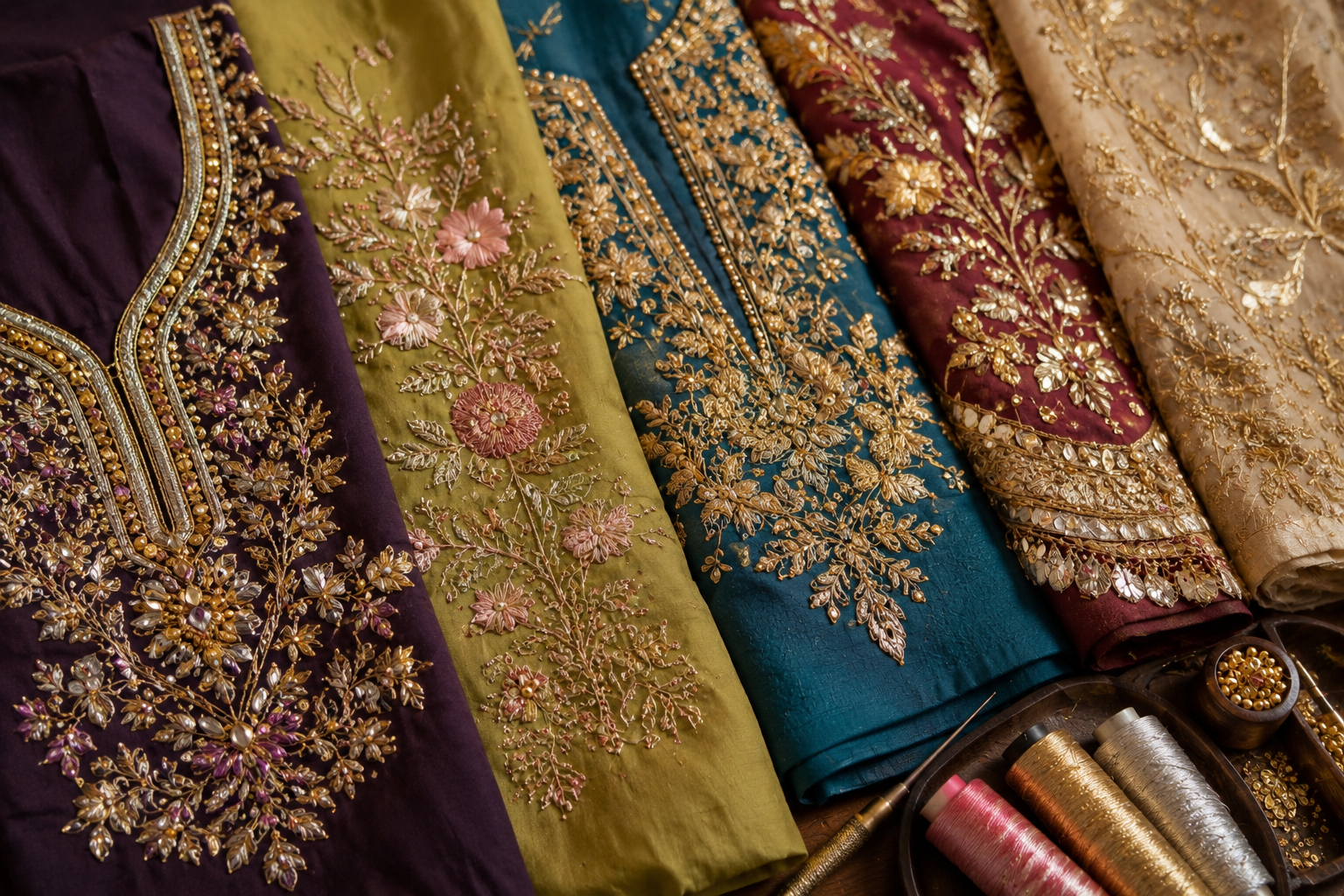
Embellishment type and density matters enormously, and this is where our embroidery guide is genuinely worth reading alongside this one. A lightly printed suit with minimal thread work costs a fraction of what a densely hand-embroidered zardozi piece does, simply because of the hours of skilled handwork involved. Machine embroidery sits somewhere in between faster to produce, and priced accordingly.
Brand and designer name plays a real role too, and it's worth being honest about that rather than pretending it doesn't. Established designer houses charge a premium partly for genuine design quality and craftsmanship, and partly for the name itself the way any fashion industry works, Pakistani or otherwise.
Stitched vs unstitched also affects the final cost, though not always in the direction people assume.
Unstitched vs Stitched: Which Actually Costs More?
This genuinely depends on how you look at it. Unstitched fabric on its own is usually cheaper than a finished, ready-to-wear suit, since you're only paying for the raw fabric and embellishment, not the labour of cutting and stitching. But once you add in the cost of a tailor whether that's a local seamstress or our own custom stitching service the total often ends up fairly close to what you'd pay for a comparable ready-to-wear piece.
Where unstitched genuinely wins is fit and customisation. You're paying, in effect, for a garment built specifically to your measurements rather than a fixed size, which is exactly why we think it's worth the extra step for anyone who's struggled with sizing in the past. If you're weighing this up properly, our guide on choosing between unstitched and ready-to-wear covers the trade-offs in more depth.
A Rough Price Breakdown by Category
Treat these as genuine ballpark figures rather than fixed rules, since individual pieces vary based on fabric, embellishment and brand.
|
Category |
Typical UK Price Range |
What You're Paying For |
|
Everyday printed lawn |
£25–£60 |
Fabric quality, simple print, minimal embroidery |
|
Embroidered lawn / cambric |
£50–£120 |
Fabric plus moderate hand or machine embroidery |
|
Luxury pret / semi-formal |
£100–£250 |
Better fabric, designer cut, richer embellishment |
|
Formal / party wear |
£150–£400 |
Heavier fabric, denser embroidery, occasion-ready finish |
|
Bridal / heavily embellished |
£300–£1000+ |
Premium fabric, extensive handwork, statement design |
Custom stitching typically adds a modest amount on top of unstitched fabric pricing, but the exact figure depends on the complexity of the design and finishing you want.
Is a More Expensive Suit Actually Better Quality?
Usually, yes, but not always, and it's worth knowing the difference. Higher price generally correlates with better fabric, more skilled hand embroidery, and more careful finishing the kind of details you notice after a few washes and wears, not necessarily on day one. But brand markup is real too, and two suits with genuinely comparable fabric and workmanship can carry different price tags simply because of the name attached.
Our honest advice: look closely at the fabric weight, check whether embroidery is hand or machine done, and factor in whether you're paying for genuine craftsmanship or largely for the label. Our party wear collection is a good place to compare embellishment levels side by side and get a feel for what different price points actually look like in person.
Getting Good Value Without Overspending
A few honest strategies we'd actually recommend. Buy lawn and everyday pieces in-season rather than waiting, since prices on last season's prints tend to drop noticeably once new collections launch. Consider unstitched fabric with custom stitching if fit matters more to you than convenience you often get better value and a better result than a mid-range ready-to-wear piece. And don't assume the most expensive option in a collection is automatically the most flattering or the most versatile; sometimes a simpler, better-fitted piece at a lower price point earns more wear than a statement piece that only suits one specific event.
Our casual collection is a genuinely good starting point if you want quality without formal-wear pricing, while our luxury pret edit sits comfortably in the middle ground for anyone wanting a step up without full bridal-level spending.
Why Some "Cheap" Suits Aren't Actually Cheaper
Worth a genuine mention: a very low-priced suit that fades after two washes, loses embroidery threads, or simply doesn't fit properly and needs alteration can end up costing more in the long run than a slightly pricier piece that holds up and fits from the start. Price is only part of the value equation longevity and fit matter just as much, arguably more.
Hidden Costs Worth Factoring In
The sticker price isn't always the full picture, and it's worth thinking through the extras before you commit to a budget. Custom stitching, if you're going that route, adds to the base fabric cost, though it's usually a modest amount relative to the suit itself. Local alteration costs can add up quickly if a ready-to-wear piece doesn't fit quite right out of the box, which is part of why we'd generally steer someone unsure of their size toward custom stitching from the start rather than a cheaper ready-made option that needs adjusting afterwards.
Delivery is another factor worth checking, particularly around Eid or wedding season when demand spikes and next-day options can carry a premium. And for anything heavily embellished, factor in dry cleaning costs over the life of the garment metallic embroidery generally can't go anywhere near a washing machine, so professional cleaning becomes a recurring cost that's easy to forget when comparing initial price tags.
Where This Leaves You
There's no single "right" amount to spend on a Pakistani suit it genuinely depends on the occasion, how often you'll wear it, and what matters most to you between fabric, embellishment and fit. Understanding what actually drives the price at least means you're making that decision with real information rather than guessing. Browse our full collection across every price point, and if you want honest guidance on where a specific piece sits value-wise, just ask us directly.
FAQs
1. How Much Should I Expect to Pay for a Pakistani Suit in the UK?
It ranges widely: roughly £25–£60 for everyday printed lawn, £100–£250 for luxury pret or semi-formal pieces, and £300 upwards for heavily embellished bridal or formal wear. The price mainly reflects fabric quality, embroidery type and density, and brand name.
2. Why Are Some Pakistani Suits So Much More Expensive Than Others?
Mainly fabric quality, the amount and type of embroidery, and brand name. Hand embroidery like zardozi takes considerably more time and skill than machine work, and premium fabrics like fine lawn or silk blends cost more before any embellishment is even added.
3. Is Unstitched or Stitched Cheaper?
Unstitched fabric alone is usually cheaper than a finished ready-to-wear suit, but once you add tailoring costs, the total often lands close to a comparable ready-made piece. The real advantage of unstitched or custom stitching is fit, not necessarily a lower final price.
4. What Makes a Designer Pakistani Suit Worth the Price?
Genuinely better fabric, more skilled hand embroidery, and more careful finishing usually justify part of the premium. That said, brand name also plays a real role in pricing, so it's worth checking fabric weight and embroidery type rather than assuming a higher price always means better craftsmanship.
5. How Can I Get Good Quality Without Paying Designer Prices?
Shop everyday lawn pieces in-season rather than waiting, consider unstitched fabric with custom stitching for a better-fitted result at a comparable price to mid-range ready-to-wear, and prioritise fabric and fit over brand name when comparing similar pieces.

Leave a comment
This site is protected by hCaptcha and the hCaptcha Privacy Policy and Terms of Service apply.