
How to Wash & Care for Pakistani Suits: Lawn, Chiffon & Embroidery Care Guide (UK)
A beautiful Pakistani suit is an investment in fabric, in craftsmanship, and in the intricate embroidery that makes it special. Yet the fastest way to ruin one is a single careless wash. Faded colours, shrunken lawn, loosened mirror work and bled dyes are almost always the result of the wrong washing method rather than poor quality.
At Kaarighar, we want the suits we send you to look as stunning on their tenth wear as they did on their first. So we have put together this complete guide on how to wash Pakistani lawn suits and every other fabric in your wardrobe, from delicate chiffon dupattas to heavily embroidered formals. Follow these steps and your favourite pieces will stay vibrant for years.
Why Caring for Your Pakistani Suits Matters
Pakistani outfits are made with premium fabrics and rich natural dyes, and they behave very differently from everyday high-street clothing. Treat them like ordinary laundry and you risk:
-
Colour bleeding, where deep dyes run and stain lighter fabric.
-
Shrinkage, especially with fine lawn and cotton in hot water.
-
Damaged embellishments, as agitation loosens gota, zari, beads and mirrors.
-
Fading, when suits dry in direct sunlight.
A little knowledge prevents all of this and it starts with understanding what your suit is actually made from. If you want a deeper look at the materials themselves, our complete guide to lawn, chiffon and organza is the perfect companion to this care guide.
Know Your Fabric First
The golden rule of Pakistani suit care is simple: always check the care label first, and when in doubt, dry clean. Different fabrics need different handling, so here is a quick-reference table our team uses:
|
Fabric |
Best Wash Method |
Key Care Tip |
|
Lawn / cotton |
Hand wash or gentle machine cycle, cold water |
Dry in shade to protect prints |
|
Cambric / khaddar |
Hand wash, cold water |
Sturdy but still fades in sunlight |
|
Chiffon / georgette |
Hand wash gently or dry clean |
Never wring; press flat |
|
Silk / raw silk |
Dry clean preferred |
Avoid direct heat and moisture |
|
Organza / net |
Dry clean |
Steam lightly from a distance |
|
Heavy embroidered / bridal |
Dry clean only |
Protect embellishments at all costs |
As a rule, casual everyday pieces like lawn and cotton can be washed at home, while luxury formals and anything heavily embellished are safest at a specialist dry cleaner. You will find plenty of both among our everyday casual suits and our luxury formal suits.
Hand Wash vs Machine Wash vs Dry Clean
Not sure which route to take? This comparison makes the decision easy:
|
Method |
Best For |
Watch Out For |
|
Hand wash |
Lawn, cotton, cambric, light chiffon |
Use cold water, mild detergent, no scrubbing |
|
Machine wash |
Plain, colourfast lawn only |
Gentle cycle, cold water, mesh bag, no embroidery |
|
Dry clean |
Silk, organza, heavy embroidery, bridal |
Choose a cleaner experienced with ethnic wear |
For most embellished suits, gentle hand washing or professional dry cleaning is always the safer choice over the machine.

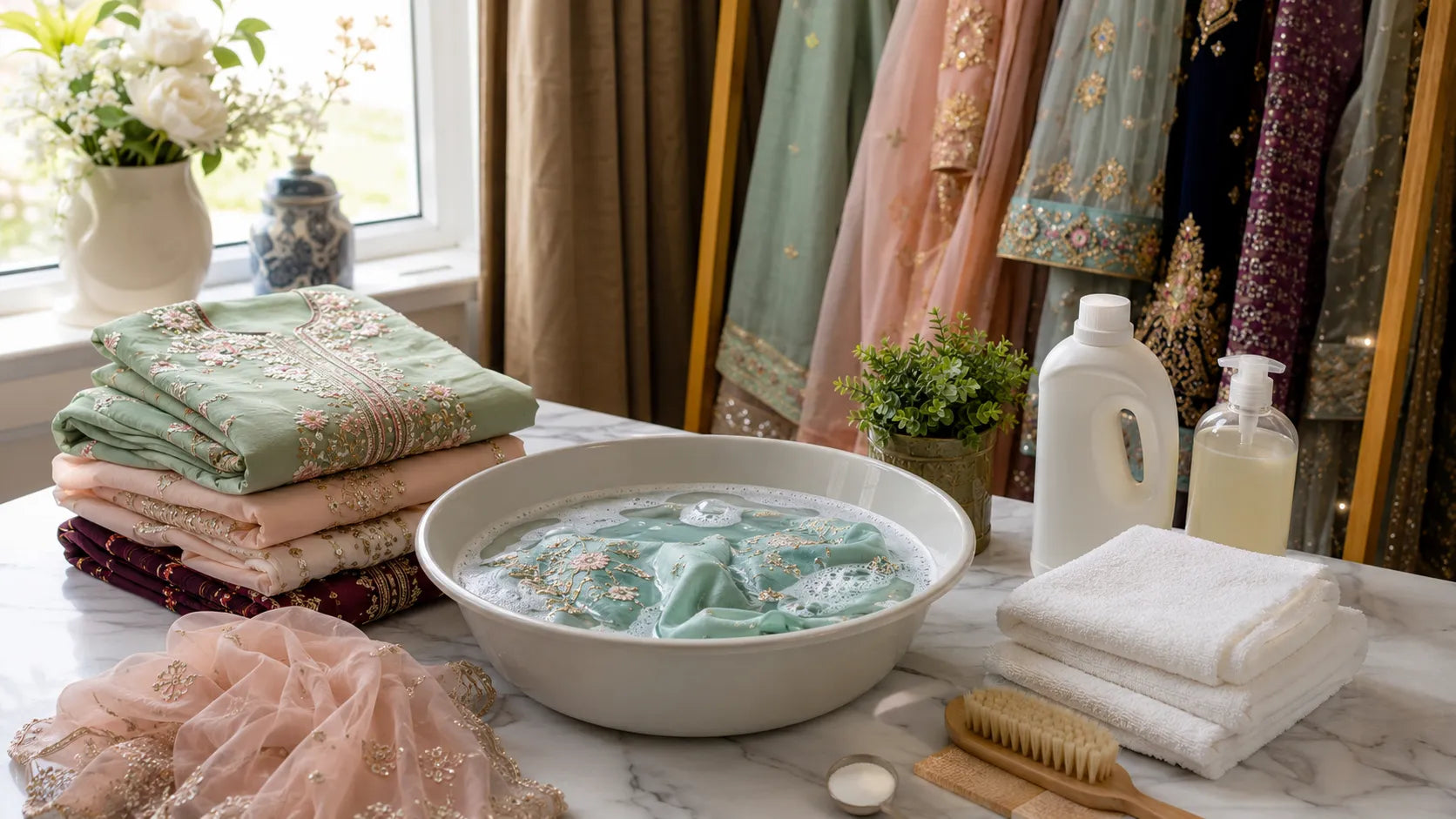
How to Hand Wash a Lawn Suit
Lawn is loved for being light and breathable, but its fine weave makes it vulnerable to heat and friction. Here is our step-by-step method:
-
Fill a basin with cold or room-temperature water never hot, which shrinks lawn.
-
Add a mild, gentle detergent (use about half the usual amount).
-
Submerge the suit and gently squeeze the soapy water through the fabric. Do not scrub or twist.
-
Keep the wash short five minutes is plenty for embellished pieces.
-
Rinse in fresh cold water until it runs clear.
-
Press out excess water by rolling the garment in a clean towel, never wringing.
This gentle approach keeps colours bright and the fabric soft.
How to Stop Colour Bleeding
New Pakistani suits, especially in deep shades like maroon, navy and black, often bleed dye in the first few washes. This is normal, but you can control it:
-
Wash dark and light suits separately for the first two or three washes.
-
Use cold water only heat opens fibres and releases more dye.
-
Add a cup of white vinegar (sirka) to the final rinse to help lock the colour.
-
Never soak a coloured suit for long periods; a quick wash is safer.
If you notice heavy bleeding, stop immediately and take the piece to a professional cleaner.
Protecting Embroidery Gota, Zari & Mirror Work
Embellished suits need the most care of all, because agitation is the enemy of delicate work. When washing anything with thread work, gota, zari, beads or mirrors:
-
Hand wash only, and only if the embroidery is simple, colourfast thread work.
-
Turn the suit inside out to shield the embellishments.
-
Do not soak submerge, gently clean, and remove quickly.
-
For metallic zari, heavy beading or mirror work, always dry clean rather than risk it at home.
Protecting these details is exactly what keeps your authentic Pakistani designer clothing looking luxurious wear after wear. Care advice can also vary by label, so it is worth checking the designer brands we stock for any specific guidance.

Washing Unstitched Fabric Before Stitching
A question we are asked often: should you wash an unstitched suit before getting it tailored? For most lawn and cotton fabrics, a gentle cold wash beforehand is a smart idea. It removes any excess dye and allows for natural shrinkage before the suit is cut and stitched to your measurements so the finished fit stays true. Heavily embroidered or delicate fabrics, however, should be left to a professional. If you are choosing between fabric and ready-made pieces, our guide to unstitched and ready-to-wear suits explains the trade-offs.
Drying, Ironing & Storage
The final steps matter just as much as the wash:
-
Drying: Lay flat or dry in the shade. Direct sunlight fades colours and weakens fine fabric.
-
Ironing: Use a low-to-medium heat and iron the suit inside out to protect prints. Avoid pressing directly on embroidery, and steam embellishments only from a distance.
-
Storage: Hang suits on padded hangers and use breathable cotton or muslin garment bags never plastic. Add lavender sachets or cedar blocks to keep pieces fresh between seasons.
Common Care Mistakes to Avoid
Sidestep these and your suits will thank you:
-
Washing in hot water, which shrinks and fades.
-
Using harsh detergents or bleach on delicate dyes.
-
Wringing or twisting embellished fabric.
-
Machine washing heavy embroidery, no matter how gentle the cycle.
-
Drying in direct sunlight.
Keep Your Wardrobe Looking Its Best
Good care is the secret to a Pakistani wardrobe that lasts. Treat each fabric according to its needs, protect the embroidery, and store your pieces with a little love. You can browse our full collection or shop by category to find your next favourite and if you ever have a question about a specific piece, simply contact our customer care team. In the rare event that something arrives faulty, our returns and refunds policy has you covered.

FAQs
1. How Do I Wash a Pakistani Lawn Suit Without Ruining the Embroidery?
Hand wash the suit inside out in cold water with a mild detergent, gently squeezing rather than scrubbing, and keep the wash to about five minutes. Do not soak it, and press out water by rolling it in a towel instead of wringing. For heavy or metallic embroidery, dry cleaning is the safest option.
2. Can I Machine Wash an Embroidered Salwar Kameez?
We do not recommend it. Machine agitation loosens thread work, gota and mirrors even on a gentle cycle. Only plain, colourfast lawn or cotton with no embellishment should go in the machine on a cold, delicate cycle inside a mesh bag. Embroidered pieces should be hand washed or dry cleaned.
3. Why Does My New Lawn Suit Bleed Colour and How Do I Stop It?
Deep natural dyes commonly bleed in the first few washes this is normal, not a fault. Wash dark suits separately from light ones for the first few washes, always use cold water, add a cup of white vinegar to the final rinse to lock the colour, and avoid long soaking.
4. Should I Wash an Unstitched Suit Before Getting It Stitched?
For most lawn and cotton fabrics, yes. A gentle cold wash before stitching removes excess dye and allows for any shrinkage before the suit is cut to your measurements, keeping the final fit accurate. Delicate or heavily embroidered fabric, however, is best left to a professional cleaner.
5. How Do I Protect Gota, Zari and Mirror Work When Washing?
Always turn the garment inside out, hand wash only if the work is simple and colourfast, and never soak it. For metallic zari, heavy beading or mirror work, choose professional dry cleaning. When ironing, press inside out on low heat and keep steam away from the embellishments.

Leave a comment
This site is protected by hCaptcha and the hCaptcha Privacy Policy and Terms of Service apply.