
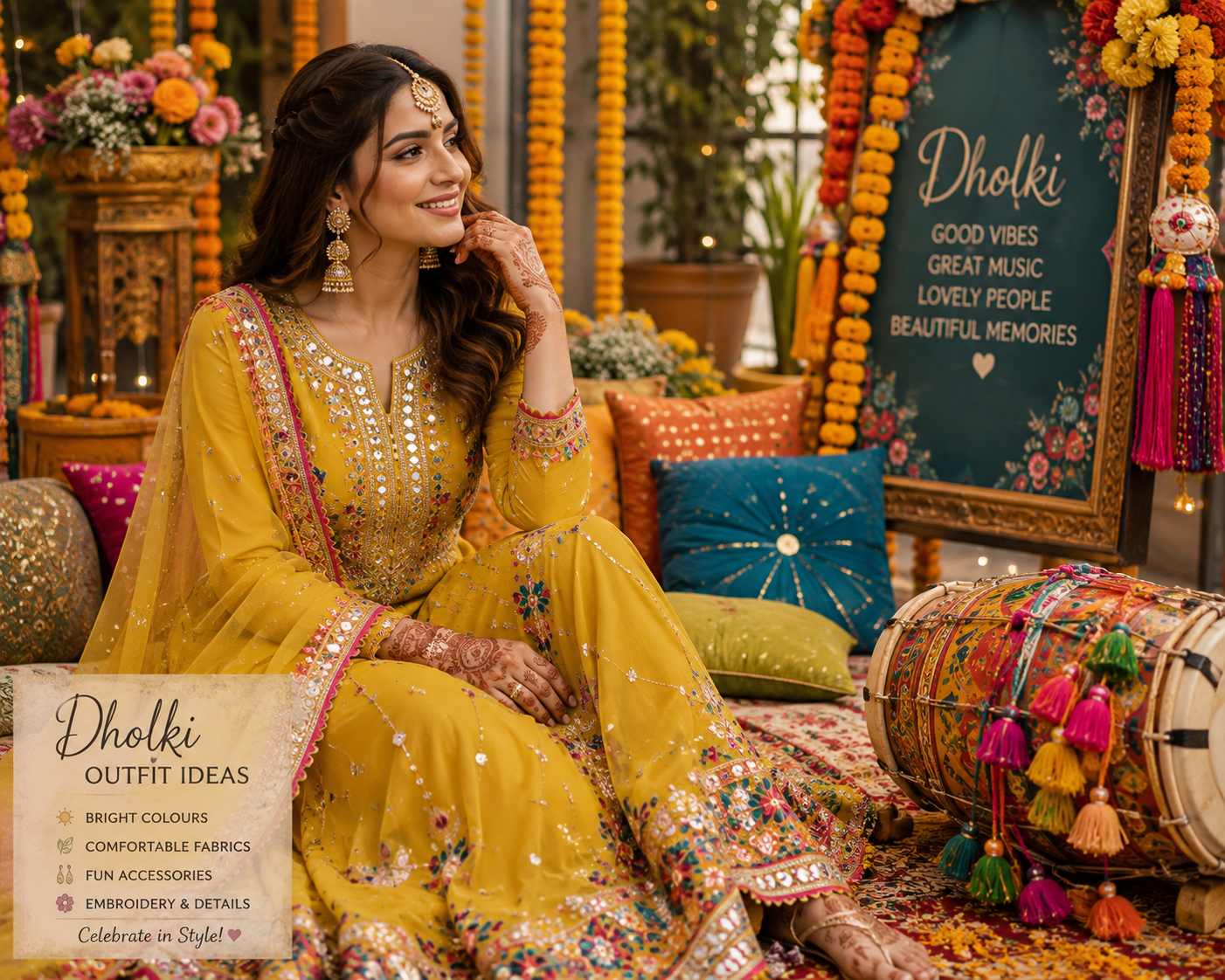
Dholki Outfit Ideas: What to Wear to Pakistani Pre-Wedding Celebrations (UK)
If you've been invited to a dholki and you're not entirely sure what that means or what you're supposed to wear, you're honestly in good company. Even within Pakistani families, dholki traditions vary quite a bit from household to household, and it's one of those events that rarely gets its own dedicated styling advice, it usually gets lumped in with mehndi content, which isn't quite right.
So let's actually separate the two properly, and talk through what genuinely works for a dholki specifically, because the practical demands of the evening are a bit different from what you'd wear anywhere else in the wedding calendar.
What a Dholki Actually Is
A dholki (sometimes spelled dholaki) is a pre-wedding celebration built around music, singing, and dancing to the dhol — the traditional drum that gives the event its name. It's often one of several smaller, more informal gatherings held in the lead-up to the wedding, sometimes at someone's home rather than a rented venue, and the whole point of the evening is joy, noise, and everyone getting involved rather than sitting quietly.
That's the key difference from a mehndi, which — despite also being festive — tends to have more structure to it: a stage, a running order, henna application as the central event. A dholki is looser, more spontaneous, and far more physical. Which matters enormously when it comes to choosing what to wear.
The One Rule That Actually Matters: Can You Move In It?
We say this with real conviction, because it's the thing people get wrong most often. A dholki is not the night to wear your most elaborate, heavily embellished outfit. You will be sitting on the floor at some point. You will be dancing, clapping, probably getting pulled up to join in whether you planned to or not. An outfit that restricts movement, or that you're constantly worrying about snagging or crushing, works against you all evening.
This is exactly why lighter, more flexible fabrics and simpler silhouettes tend to be the better choice here, even though it's still very much an occasion worth dressing up for. Festive doesn't have to mean restrictive.
Colours: Go Bright, Go Bold
Dholki is one of the few Pakistani wedding functions where you can genuinely lean into colour without much risk of getting it "wrong." Mustard yellow, hot pink, turquoise, orange, and vibrant green are all classic dholki choices, and there's a reason for that beyond tradition — bright colours photograph and film beautifully under the kind of dim, warm indoor lighting these events usually happen under, and they suit the high-energy, celebratory mood of the evening far better than something muted or pastel.
Red is generally best left for the bride and the barat, and very dark or sombre colours tend to feel out of step with the tone of the night, but beyond that, this is genuinely a "wear what makes you happy" kind of event.
Silhouettes That Actually Work for Dancing
Sharara and gharara sets are a genuinely excellent choice here, and it might surprise people who assume flared bottoms would get in the way. In practice, the flare gives you room to move, sit cross-legged, and dance without the restriction a fitted trouser or pencil-cut bottom would create.
A flowing Anarkali works beautifully too, provided it's in a lighter fabric — georgette or chiffon rather than anything stiff or heavily structured. The flare moves with you rather than fighting you.
Simple, well-cut kurta and palazzo sets are an increasingly popular dholki choice, especially for guests who want something comfortable and stylish without the full weight of a formal wedding outfit. Our casual kurta collection has plenty of relaxed, easy-to-move-in options that suit this exact mood.
What we'd genuinely steer you away from: heavily structured lehengas with a lot of underlayer support, very fitted body-con kameez, and anything with delicate, easily-damaged embellishment like loose sequins or fragile hand embroidery that a lively evening of dancing could genuinely wreck.
Dholki vs Mehndi: Getting the Distinction Right
We mentioned this earlier, but it's worth spelling out clearly, since so much online content treats them as interchangeable. A mehndi usually has a bride's stage, a structured programme of performances, and the central ritual of henna application — the dress code, while festive, tends to be a notch more considered and photograph-ready. A dholki is looser and more communal, often smaller, and the dress code should reflect that relaxed, high-movement energy rather than mirroring mehndi styling exactly.
If you're attending both for the same wedding, it's genuinely fine — expected, even — to wear something simpler and more comfortable to the dholki and save your more elaborate piece for the mehndi stage moment.
Fabric Choices Worth Prioritising
Given how physical a dholki evening tends to be, fabric choice really does matter more than at almost any other function.
-
Georgette and chiffon move beautifully and don't crease or crush easily, which matters when you're sitting on the floor for parts of the evening.
-
Cotton and lawn work well for a more casual dholki, particularly a daytime or garden setting.
-
Avoid stiff net, heavy velvet, or anything with a lot of internal structure — these fabrics simply don't forgive movement the way softer ones do.
If you're custom-stitching a piece specifically for a dholki, it's worth mentioning the occasion to your tailor, since ease through the hip and shoulder matters more here than for a seated, formal function. Our guide on how to measure yourself for a custom-stitched suit covers exactly what we need to get that right.
Where to Start Looking
For sharara or gharara sets with genuine movement built into the cut, our party wear collection is a strong starting point. If you're after something in the festive, brighter colour range specifically, our chikankari and festive prints edit has some lovely lighter, colourful pieces that suit the occasion well without tipping into full bridal territory.
Jewellery and Accessories for a Dholki
The same "will this survive an evening of dancing" question applies to accessories as much as the outfit itself. Heavy, dangling jhumkas can catch on dupattas or hair mid-dance, and an elaborate, structured necklace can genuinely become uncomfortable after a couple of hours of movement. Simpler oxidised silver or gold-tone jewellery, colourful bangles, and statement earrings that sit close to the ear all tend to hold up far better through a lively evening.
Footwear deserves the same thought. Flat juttis or comfortable block heels are the practical choice, since you'll likely be barefoot or in socks for parts of the dancing anyway, and comfort genuinely wins out over a very high heel here. A small potli bag or clutch, rather than anything bulky, rounds off a look that's both festive and genuinely wearable for the whole evening.
The Short Version
Dholki is genuinely one of the most fun, least stressful outfits to plan for in the whole wedding calendar, once you let go of the idea that it needs to match the formality of the barat or even the mehndi. Bright, comfortable, easy to move in — that's the whole brief. Browse our full collection whenever you're ready, and if you want help picking something that'll actually hold up to a night of dancing, just ask.
FAQs
1. What Should I Wear to a Dholki?
A bright, comfortable outfit that lets you move freely — sharara or gharara sets, flowing Anarkalis, or simple kurta and palazzo sets all work well. Lighter fabrics like georgette, chiffon, cotton or lawn are better suited to a dholki than stiff, heavily structured pieces.
2. Is a Dholki the Same as a Mehndi?
No, though they're often confused. A mehndi is typically more structured, with a bride's stage and the central henna ceremony, while a dholki is a looser, more communal celebration built around music and dancing. Dholki outfits should prioritise comfort and movement more than mehndi outfits do.
3. What Colours Are Worn at a Dholki?
Bright, festive colours like mustard yellow, hot pink, turquoise, orange and vibrant green are classic dholki choices. Red is generally reserved for the bride, but beyond that, this is one of the more colour-flexible wedding functions.
4. What Outfit Is Comfortable Enough for Dancing at a Dholki?
Sharara and gharara sets are particularly good, since the flared bottom gives room to move and sit comfortably. Flowing Anarkalis in lighter fabrics also work well. Avoid heavily structured lehengas, fitted body-con kameez, or delicate embellishment that could easily get damaged.
5. Can Guests Wear the Same Outfit to Dholki as Mehndi?
You can, but it's not necessary and often not ideal. Since a dholki is more physical and informal than a mehndi, many guests choose something simpler and more comfortable for the dholki and save a more elaborate outfit for the mehndi's stage moment.

Leave a comment
This site is protected by hCaptcha and the hCaptcha Privacy Policy and Terms of Service apply.