
Pakistani 2-Piece vs 3-Piece Suits: What Is the Difference and Which Should You Buy in the UK
If you have spent any time shopping for Pakistani suits in the UK, you will have come across product listings described as 2-piece, 3-piece, or sometimes even 4-piece. The number refers to how many coordinated garment pieces are included in the set, and while it might seem like a simple detail, it has a significant effect on formality, versatility, styling, and value.
At Kaarighar, we stock both 2-piece and 3-piece Pakistani suits across casual, luxury pret, and formal categories. The question of which to buy is one we field every day, and this guide gives you the definitive answer: what each format includes, how formal each is, which occasions each suits, and how to decide which is right for your wardrobe and your next occasion.
Browse our full range of luxury pret and luxury formals at Kaarighar, and read our unstitched vs ready to wear guide for further context on suit formats in Pakistani fashion.
The Three Building Blocks: Kameez, Trouser, Dupatta Explained
Before comparing 2-piece and 3-piece formats, it helps to understand what each of those pieces actually is. Pakistani suits are built from three core garment components, and every format is simply a different combination of the same three elements.
Kameez is the top garment, the long tunic or shirt that forms the centrepiece of any Pakistani suit. It can be long or short, fitted or loose, plain or embellished. The kameez is the piece that carries the most design attention: embroidery, print, neckline detail, and sleeve styling are all concentrated here.
Trouser (Salwar, Churidar, or Straight) is the bottom garment. Pakistani suits are paired with a variety of trouser styles, from the wide, gathered salwar to the narrow, tapered churidar, to the straight-cut trouser that dominates contemporary pret. The trouser is typically cut from the same fabric as the kameez, or from a complementary coordinated fabric.
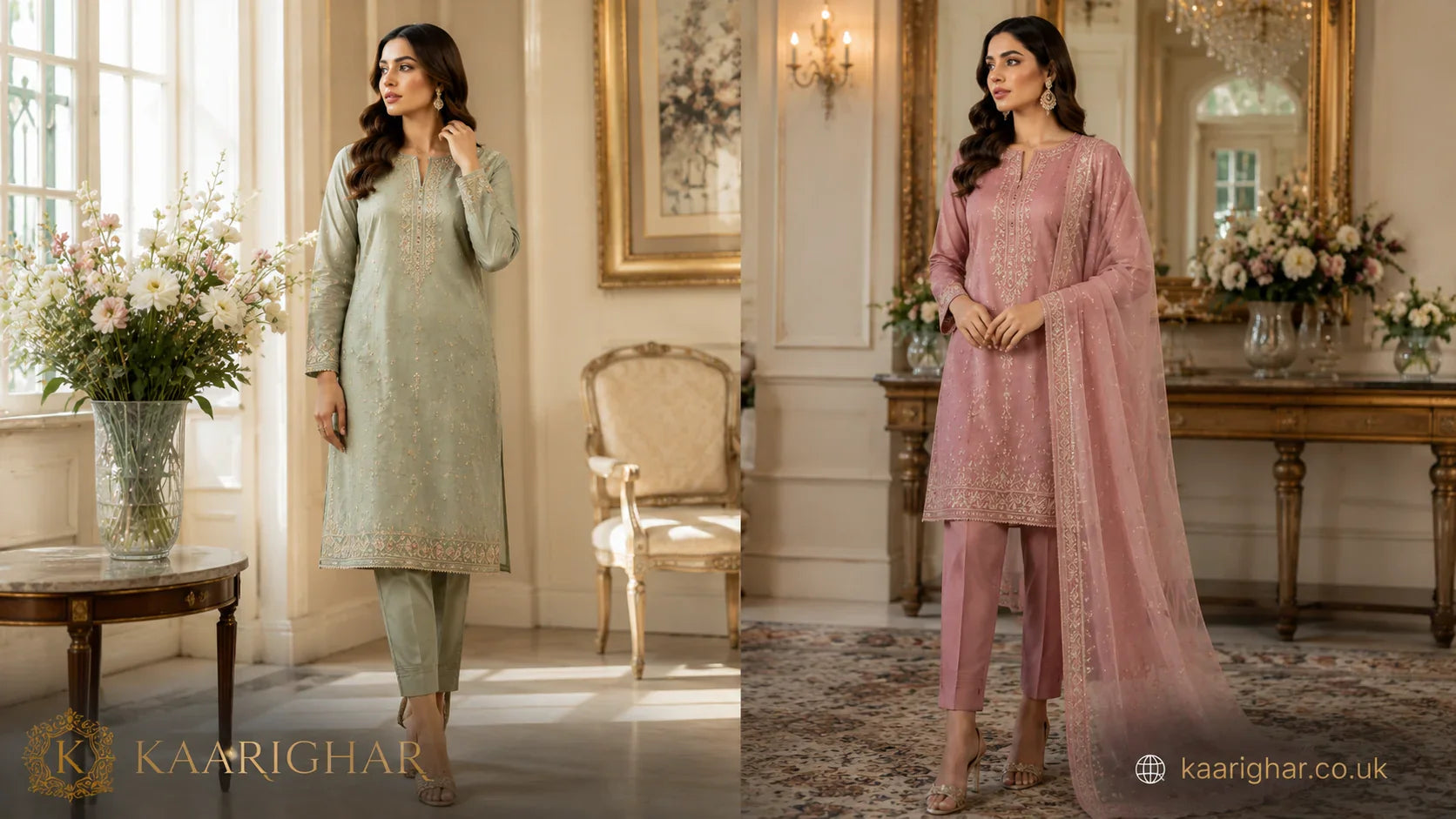
Dupatta is the long scarf or wrap that drapes over the outfit. The dupatta is the third piece of a Pakistani suit and is the element that most dramatically affects the formality of the overall look. A heavily embroidered or embellished dupatta transforms a simple kameez and trouser into a formal outfit. A plain or printed chiffon dupatta adds elegance without heaviness. No dupatta at all creates a more casual, contemporary result.
Understanding these three pieces makes the 2-piece vs 3-piece question immediately intuitive.
What Is a 2-Piece Pakistani Suit?
A 2-piece Pakistani suit contains two coordinated garment pieces: kameez and trouser only. There is no dupatta included.
This does not mean you cannot wear a dupatta with a 2-piece suit. Many women add their own dupatta to a 2-piece. But the suit as sold does not include one, and the design has been conceived to work as a complete look without it.
Why Do 2-Piece Suits Exist?
The 2-piece format has grown in popularity for several reasons that are particularly relevant to British-Pakistani women:
Simplicity and ease of styling. A 2-piece suit in the right fabric and colour can be worn without a dupatta in casual settings, reducing the styling effort and creating a cleaner, more contemporary silhouette.
Weight and comfort. Particularly in summer and for everyday wear, the dupatta adds warmth and bulk that is not always welcome. A 2-piece lawn suit in warm weather is significantly more comfortable than carrying and managing an additional layer of fabric.
Contemporary fashion direction. Younger British-Pakistani women increasingly choose 2-piece formats for casual and semi-formal occasions, reflecting a broader shift toward more relaxed Pakistani styling that does not require the full three-piece traditional presentation.
Lower price point. A 2-piece suit is typically less expensive than a 3-piece from the same collection because it uses less fabric. For building a large everyday wardrobe of Pakistani clothes, 2-piece suits offer excellent value.
Is a Dupatta Included in a 2-Piece Pakistani Suit?
No. By definition, a 2-piece suit includes only the kameez and trouser. If the listing says 2-piece, there is no dupatta in the set. If you want to wear a dupatta, you can add one separately. At Kaarighar, our product listings clearly state the number of pieces included, so you always know exactly what you are buying.
What Is a 3-Piece Pakistani Suit?
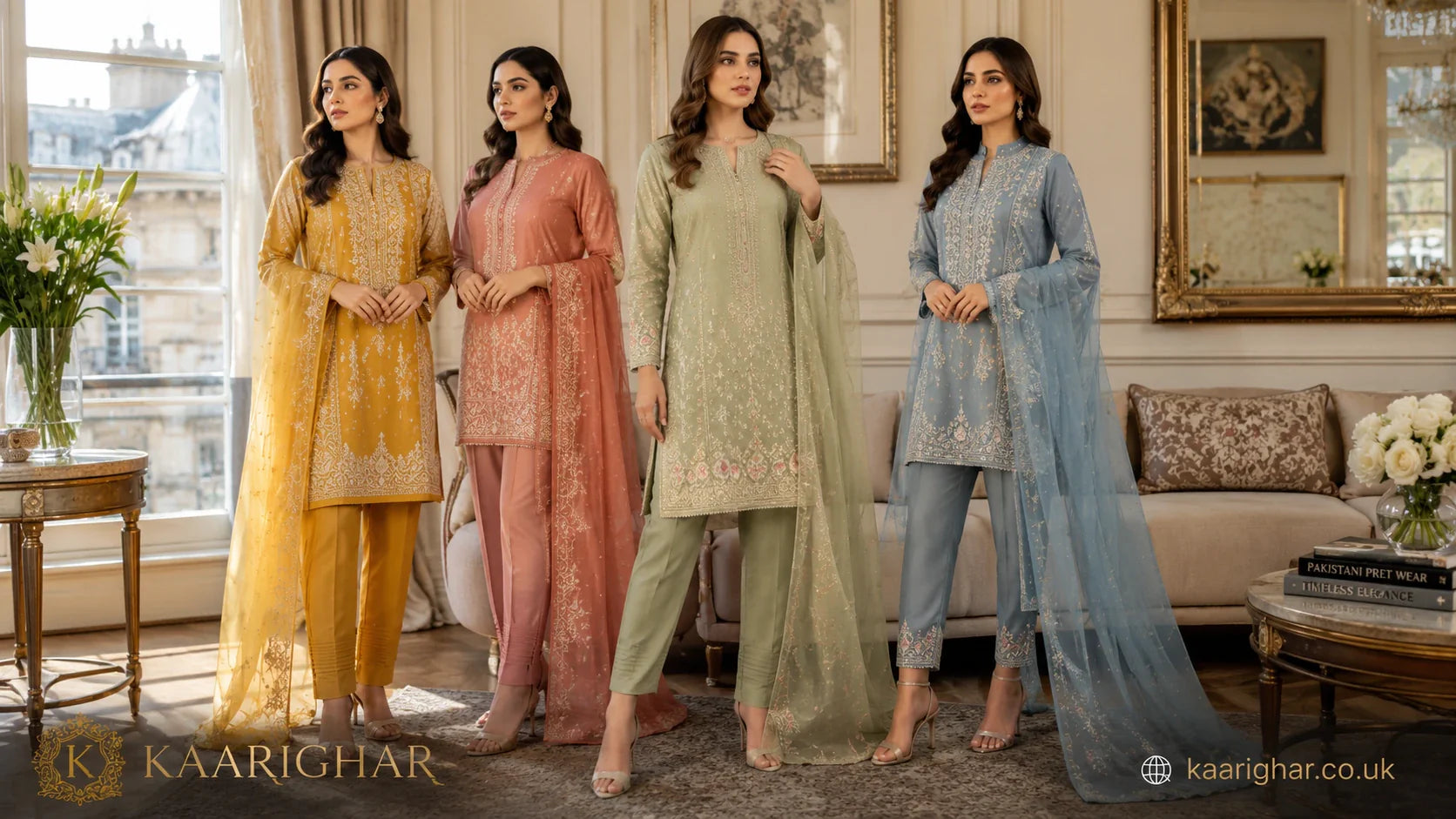
A 3-piece Pakistani suit contains three coordinated pieces: kameez, trouser, and dupatta. This is the traditional, complete Pakistani suit format and remains the standard for formal and occasion wear.
What Does a 3-Piece Pakistani Suit Include?
A standard 3-piece suit includes:
-
Kameez: The top garment, which in formal 3-piece suits is often heavily embellished.
-
Trouser or bottom: Cut from a coordinated fabric, often embellished at the hem in formal suits.
-
Dupatta: The third piece, which in formal suits is often embellished with borders, embroidery, or printed detailing to coordinate with the kameez.
In luxury formal 3-piece suits, the dupatta is frequently the most impressive single element of the set: heavy embroidered borders, lace edging, sequin detailing, and fine chiffon or net construction all contribute to a dupatta that elevates the entire outfit's formality.
The Sana Safinaz Luxury L241-010A 3CV is a perfect example of a 3-piece formal suit at its most accomplished. The kameez, trouser, and dupatta are coordinated with the precision and elegance that Sana Safinaz is known for, and the three-piece format produces a complete, polished formal look with no additional styling required.
What About 4-Piece Suits?
Some Pakistani suits are listed as 4-piece. These typically include kameez, trouser, dupatta, and an additional piece such as a plain inner lining fabric, a coordinating trouser in a second fabric, or an additional embellished panel. The Cross Stitch Lilac Luster 4-Piece Embroidered Chiffon Suit is an excellent example: four fully coordinated and beautifully embellished pieces in a single set that provides a complete formal look.
2-Piece vs 3-Piece: The Key Differences at a Glance

|
Feature |
2-Piece Suit |
3-Piece Suit |
|
What is included |
Kameez and trouser |
Kameez, trouser and dupatta |
|
Is a dupatta included? |
No |
Yes |
|
Formality level |
Casual to semi-formal |
Semi-formal to formal |
|
Best occasions |
Everyday, casual, work, light occasions |
Eid, weddings as guest, formal dinners |
|
Seasonal preference |
Summer and warm weather |
Year-round, particularly autumn/winter |
|
Price |
Generally lower |
Generally higher |
|
Styling flexibility |
High (add your own dupatta if desired) |
Lower (designed as a complete coordinated set) |
|
Most popular formats |
Lawn 2-piece, printed pret 2-piece |
Embroidered chiffon 3-piece, formal luxury 3-piece |
Formality: Are 2-Piece Suits Less Formal?
Yes, in general, 2-piece suits sit lower on the formality scale than 3-piece suits. The dupatta is the key formality signal in Pakistani fashion: its presence, its quality, and its level of embellishment all communicate the seriousness of the occasion.
That said, formality is not determined by piece count alone. A heavily embellished 2-piece suit in raw silk with intricate threadwork will always look more formal than a plain 3-piece in everyday cotton. Fabric and embellishment are ultimately more powerful formality indicators than whether the outfit includes a dupatta.
However, for occasions where Pakistani cultural expectations are at their highest, specifically formal weddings as a guest, Eid celebrations, and family formal events, a 3-piece suit signals the appropriate level of effort and respect for the occasion. Arriving at an Eid gathering or a nikah in a 2-piece casual pret suit can appear underdressed, regardless of the quality of the individual pieces.
For further guidance on what formality level different occasions demand, our finding the perfect 3-piece Pakistani stitched suit guide is an excellent companion read.
Seasonal Suitability: When to Choose 2-Piece vs 3-Piece
Seasonal considerations play a significant role in the 2-piece vs 3-piece decision for UK shoppers, where the climate is considerably cooler and more variable than in Pakistan.
Summer and warm weather: 2-piece lawn suits are ideal for the UK summer months. A lightweight printed or embroidered lawn 2-piece in a fresh colour is comfortable, practical, and requires far less management than a full 3-piece with dupatta in warm conditions. The Hussain Rehar Corale Spring Summer Lawn 24 is a beautifully crafted example of a luxury lawn suit suited to warm-weather dressing.
Autumn and winter: 3-piece suits come into their own in the cooler months. The dupatta provides an additional warm layer and works with heavier fabrics like karandi, khaddar, velvet, and winter lawn. A formal 3-piece in a rich winter fabric is one of the most satisfying Pakistani fashion investments a UK shopper can make. Read our Pakistani lawn vs chiffon vs organza fabric guide for more on seasonal fabric choices.
Eid: 2-Piece or 3-Piece?
For Eid, we always recommend a 3-piece suit. Eid is one of the most important occasions in the British-Pakistani calendar, and a 3-piece outfit in a festive colour with embellishment signals the appropriate effort and celebration. The dupatta is particularly important for Eid prayers, where modesty of dress is culturally expected.
That said, if you are shopping for a relaxed Eid day outfit for younger children or for a casual gathering later in the day, a beautifully printed 2-piece in a festive colour is entirely acceptable. The key is reading the specific occasion within the broader Eid day.
Stitched vs Unstitched: Does It Apply to Both?
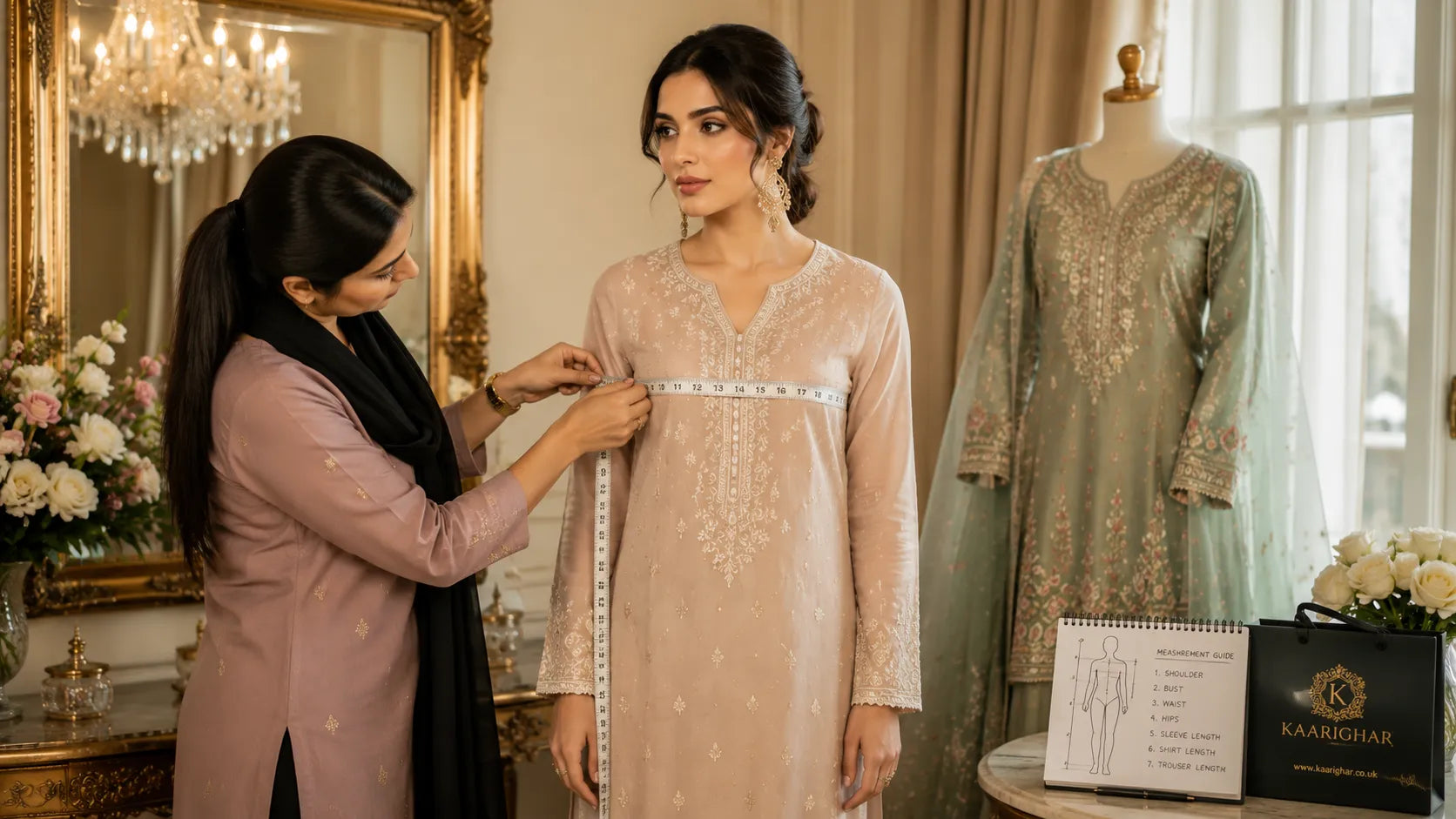
Both 2-piece and 3-piece Pakistani suits are available in stitched (ready to wear) and unstitched formats. The choice between stitched and unstitched applies independently of whether the suit is a 2-piece or 3-piece.
Stitched 2-piece: Buy it, wear it immediately. Ideal for convenience shopping, gifts, and last-minute occasions.
Unstitched 2-piece: Two pieces of fabric (kameez fabric and trouser fabric) requiring tailoring. Lower price, better fit potential.
Stitched 3-piece: The most common format for luxury pret. All three pieces are finished and ready to wear.
Unstitched 3-piece: Three pieces of fabric (kameez fabric, trouser fabric, and dupatta fabric) requiring tailoring for the kameez and trouser. Often offers the best combination of quality and custom fit. The Maria B Unstitched Linen Ash Pink DL-1106 is a beautiful unstitched example from our collection.
For a full exploration of the stitched vs unstitched decision, read our unstitched vs ready to wear guide.
Value for Money: Which Is Better?
Neither format is inherently better value than the other. The right purchase depends entirely on what you need it for.
2-piece offers better value when you are building an everyday wardrobe, shopping for multiple outfits for the same season, or buying for casual occasions where the dupatta would not be worn anyway.
3-piece offers better value when you are buying for a specific formal occasion, Eid, or a wedding as a guest, because the coordinated dupatta is designed precisely for that outfit and saves you the time, effort, and cost of sourcing one separately.
A common mistake UK shoppers make is buying a 2-piece for a formal occasion and then purchasing a separate dupatta that does not coordinate well. In this situation, the 3-piece would have been both simpler and better value.
Browse our full selection of Pakistani suits for every occasion at Kaarighar, and explore our Pakistani casual suits guide for more everyday suit recommendations.
Which Pakistani Brands Sell 2-Piece and 3-Piece Suits in the UK?
At Kaarighar, we carry both formats across our full brand portfolio. Here is how the most popular brands split across the two:
Maria B produces both 2-piece lawn suits (casual and semi-formal) and 3-piece luxury pret and formal sets. The M.Prints range is a strong 2-piece casual option, while the Luxury Pret collection offers beautifully crafted 3-piece suits for Eid and formal occasions.
Sana Safinaz primarily produces 3-piece suits across lawn, luxury formal, and winter collections. The three-piece format is central to the brand's elegant, complete-look aesthetic.
Hussain Rehar produces both 2-piece and 3-piece lawn suits within the same seasonal collections, giving shoppers flexibility across the same designer range.
Cross Stitch produces 2-piece casual lawn and 3-piece and 4-piece embroidered formal suits. The Eid and formal collections are predominantly 3-piece and 4-piece formats.
Sapphire and Limelight produce a strong mix of 2-piece casual pret and 3-piece occasion wear, making them the most accessible entry points for both formats at everyday price points.

Most Asked FAQs
Q1. What Is The Difference Between A 2-Piece And 3-Piece Pakistani Suit?
A 2-piece Pakistani suit includes a kameez (top) and trouser only. A 3-piece suit includes a kameez, trouser, and dupatta (scarf). The dupatta is the key difference and the element that most significantly affects the formality of the overall look. 3-piece suits are generally more formal and more suitable for Eid, weddings, and special occasions. 2-piece suits are more casual, more comfortable in warm weather, and more flexible for everyday styling. Browse our luxury pret collection for both formats.
Q2. Is A Dupatta Included In A 2-Piece Pakistani Suit?
No. A 2-piece Pakistani suit includes only the kameez and trouser. The dupatta is the third piece and is only included when the listing specifies 3-piece (or more). If you want to wear a dupatta with a 2-piece suit, you can add one separately in a coordinating colour or fabric. At Kaarighar, all our product listings clearly state the piece count so you always know exactly what is included before purchasing.
Q3. Which Is Better For Eid: A 2-Piece Or 3-Piece Pakistani Suit?
For Eid, we recommend a 3-piece suit. Eid is a formal occasion in Pakistani culture, and a 3-piece suit with a coordinated dupatta signals the appropriate level of effort and respect for the celebration. The dupatta is particularly important for Eid prayers. A 2-piece can work for very relaxed, informal Eid gatherings later in the day, but for the main Eid occasion, a 3-piece in a festive colour and quality fabric is always the stronger choice. Read our Eid dresses blog for more guidance.
Q4. Are 2-Piece Pakistani Suits Less Formal?
Generally yes, but not exclusively. Piece count is one formality indicator, not the only one. Fabric quality, embellishment level, and colour all contribute significantly to the formality of an outfit. A 2-piece in heavy embroidered chiffon with a rich colour can look more formal than a plain 3-piece in everyday cotton. That said, for occasions where Pakistani cultural formality expectations are at their highest, a 3-piece suit is the standard choice because the dupatta is an intrinsic part of formal Pakistani dressing. Read our finding the perfect 3-piece stitched suit guide for more.
Q5. What Does A 3-Piece Pakistani Suit Include?
A standard 3-piece Pakistani suit includes three coordinated pieces: the kameez (top garment), the trouser or salwar (bottom garment), and the dupatta (long scarf or wrap). In formal and luxury suits, all three pieces are coordinated in fabric, colour, and embellishment to create a complete, polished look. Some suits are listed as 4-piece, which typically adds a fourth coordinated element such as an inner lining, embellished panel, or additional fabric piece. Explore our luxury formals collection and the Pakistani fashion trends UK 2026 guide for current 3-piece suit picks.
Shop our full range of Pakistani 2-piece and 3-piece suits at kaarighar.co.uk with next-day UK delivery available.

Leave a comment
This site is protected by hCaptcha and the hCaptcha Privacy Policy and Terms of Service apply.