
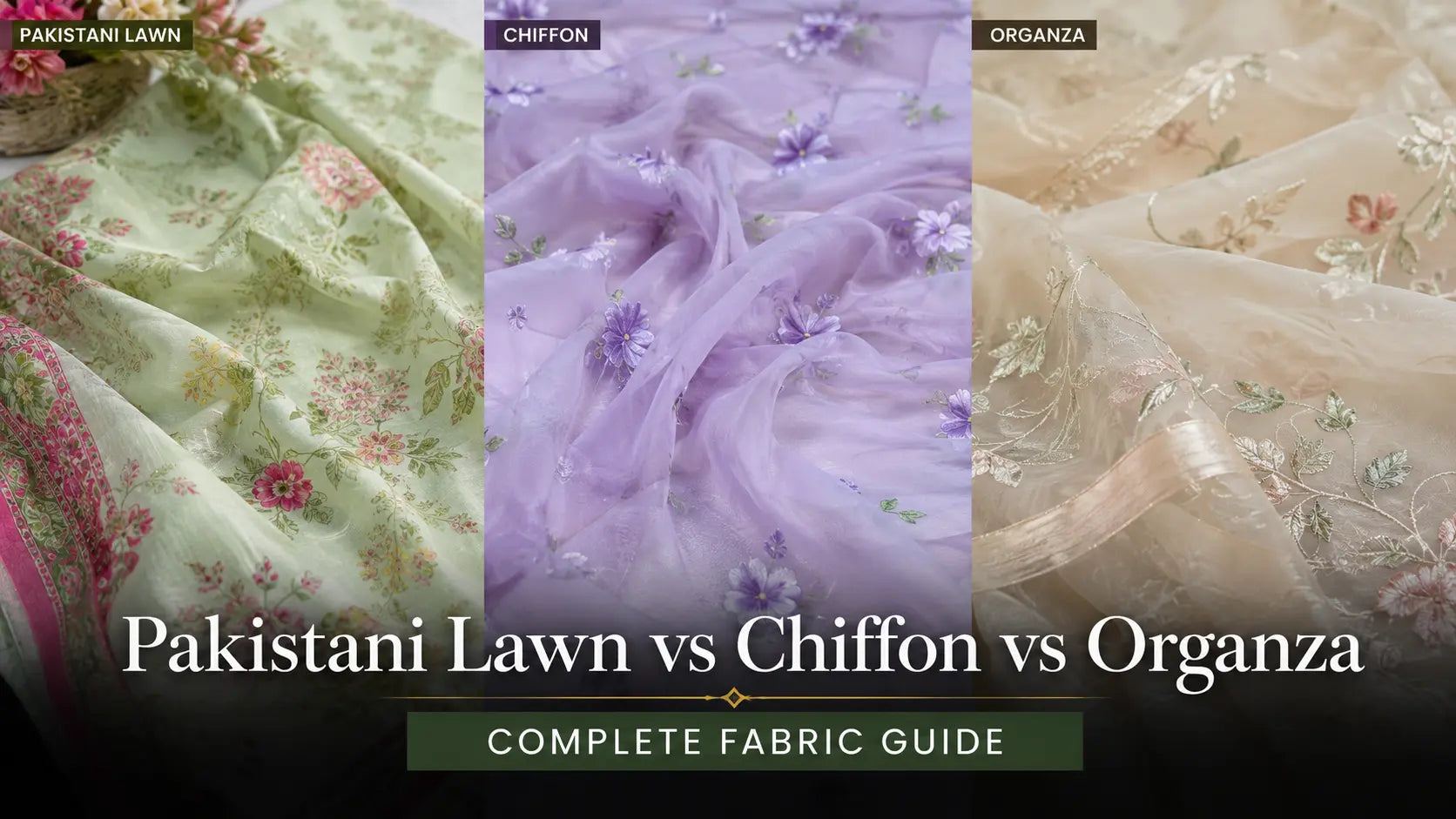
Pakistani Lawn vs Chiffon vs Organza: Complete Fabric Guide
When we think about Pakistani fashion, we think first about the fabric. Before the embroidery, before the colour palette, before the silhouette it is the fabric that determines everything: how a garment feels against the skin, how it moves, how it holds embellishment, and whether it suits the occasion and season. Yet for many shoppers, especially those new to South Asian fashion, terms like lawn, chiffon, and organza can feel interchangeable. They are not.
In this complete fabric guide, we walk you through the three most popular fabrics in Pakistani women's fashion lawn, chiffon, and organza covering their properties, ideal uses, care requirements, and how to choose between them. Whether you are shopping for everyday wear, a formal event, or a bridal celebration, understanding fabric will transform how you shop and how you dress.
Pakistani Lawn: The Fabric of Everyday Elegance

1. What Is Lawn Fabric?
Lawn is a plain-woven fabric made from cotton sometimes blended with polyester or viscose that is woven at a very high thread count. The result is a fabric that is fine, lightweight, and breathable, with a smooth surface that takes printed and embroidered designs exceptionally well. Originating from the city of Laon in France, lawn fabric found its true home in South Asia, where it became the cornerstone of Pakistani ready-to-wear fashion.
Pakistani lawn is distinct from generic cotton lawn in one important way: the finishing process. Pakistani textile mills apply a special mercerisation and calendering process that gives the fabric its characteristic crisp feel, subtle sheen, and resistance to creasing. This is what makes a premium Pakistani lawn suit feel different from ordinary cotton: it is refined, structured, and polished even in its simplest form.
Properties of Lawn Fabric
-
Weight: Very lightweight ideal for warm weather
-
Texture: Smooth, fine, and slightly crisp with a gentle natural lustre
-
Breathability: Excellent the high thread count allows air circulation while blocking UV rays
-
Drape: Falls softly but holds its shape, making it easy to wear and style
-
Printability: Takes screen-printed and digital-printed designs beautifully, with vibrant colour retention
-
Durability: Surprisingly resilient high-quality lawn suits last many seasons with proper care
2. When to Wear Lawn
Lawn is the fabric of spring and summer. From April through to September, it is the go-to choice for everyday wear, office outfits, casual outings, and informal family gatherings. Its breathability makes it genuinely comfortable in warmer weather, something that heavier fabrics simply cannot match.
That said, premium lawn with heavy embroidery or intricate printed dupattas can be elevated for semi-formal occasions too. Many Pakistani designers now produce luxury lawn collections that walk the line between casual and smart-casual, making the fabric far more versatile than its everyday reputation suggests.
3. Lawn in Pakistani Designer Collections
Lawn collections are the heartbeat of the Pakistani fashion calendar. Every major designer and house releases multiple seasonal lawn collections each year. Maria B's M.Prints is one of the most anticipated, celebrated for its vibrant digital prints and high-quality fabric that feels luxurious despite its accessibility. Brands like Sana Safinaz, LimeLight, and Cross Stitch also release highly sought-after lawn lines that sell out quickly.
Caring for Lawn
-
Machine washable at 30°C on a gentle cycle
-
Avoid tumble drying air dry flat or on a hanger to preserve the shape
-
Iron on medium heat while slightly damp for a crisp finish
-
Store folded or hung avoid prolonged compression which can crease fine lawn permanently
Pakistani Chiffon: The Fabric of Grace and Glamour

1. What Is Chiffon Fabric?
Chiffon is a sheer, lightweight woven fabric originally made from silk though today it is more commonly produced from polyester, nylon, or a silk-polyester blend. The fabric gets its distinctive characteristics from its twisted yarns: the tight twist creates a slightly rough, grainy texture that gives chiffon its characteristic matte finish and exceptional draping quality.
In Pakistani fashion, chiffon holds a particularly prestigious status. It is the fabric most associated with formal and semi-formal occasions, the go-to choice for party wear, wedding guest outfits, and statement ensembles. When embellished with thread work, sequins, mirror embroidery, or zardozi, chiffon becomes truly spectacular, draping around the body with a fluidity that no other fabric quite matches.
Properties of Chiffon Fabric
-
Weight: Extremely lightweight and fluid
-
Texture: Slightly rough to the touch, with a beautiful matte sheen that catches light subtly
-
Breathability: Good but not as breathable as lawn the sheerness means airflow, but it can cling in humidity
-
Drape: Exceptional chiffon flows and moves with the wearer in a way that is uniquely flattering
-
Embellishment capacity: Outstanding the fabric holds embroidery and embellishments beautifully without becoming stiff
-
Sheerness: Sheer, typically requiring a lining or an underdress
2. When to Wear Chiffon
Chiffon is a year-round fabric in Pakistani fashion, though it truly excels in formal settings. Weddings, Eid celebrations, dinner parties, and black-tie events are where chiffon dresses and suits come into their own. The flowing nature of the fabric creates movement with every step, which is why chiffon dupattas and shirts remain perennially popular for any occasion requiring elegance.
Chiffon is also the preferred choice for dupattas in many collections even lawn suits often feature chiffon dupattas because the sheer, flowing quality of the fabric adds a finishing touch of sophistication to any ensemble.
3. Chiffon in Pakistani Designer Collections
Luxury chiffon collections are where Pakistani designers often showcase their most impressive embellishment work. Houses like Hussain Rehar, Suffuse, and Faiza Saqlain are renowned for their exquisitely embroidered chiffon pieces that represent the pinnacle of Pakistani formal fashion.
If you are considering a formal Pakistani outfit for a special occasion, our blog on where to buy elegant Pakistani party wear in the UK covers the best options available.
Caring for Chiffon
-
Hand wash in cool water with a mild detergent avoid wringing or twisting
-
Dry clean is recommended for heavily embellished pieces
-
Dry flat away from direct sunlight to prevent colour fade and fabric distortion
-
Iron on the lowest heat setting with a pressing cloth, or steam gently
-
Store hanging in a breathable garment bag to prevent fabric from snagging or crushing embellishments
Pakistani Organza: The Fabric of Luxury and Structure

1. What Is Organza Fabric?
Organza is a thin, plain-woven sheer fabric that was traditionally made from silk, though contemporary organza is commonly produced from polyester or nylon for cost and durability reasons. What distinguishes organza from chiffon despite both being sheer and lightweight is its stiffness. Organza holds its structure; it does not drape and flow like chiffon. Instead, it creates volume, holds pleats, and maintains shape with an architectural quality that makes it ideal for structured garments.
In Pakistani bridal and formal fashion, organza has become increasingly popular over the past decade. Its ability to hold intricate embroidery including three-dimensional floral motifs, cutwork, and heavy zardozi while remaining lightweight makes it the preferred choice for luxury formal and bridal wear. When you see a stunning Pakistani bridal lehenga or a formal shirt with dimensional embellished motifs, the base fabric is very often organza.
Properties of Organza Fabric
-
Weight: Lightweight but with a structured body that resists collapsing
-
Texture: Crisp, slightly rough, and sheer with a subtle luminosity
-
Breathability: Moderate the structure of the weave reduces airflow somewhat
-
Drape: Minimal flow organza holds its shape and creates volume rather than draping against the body
-
Embellishment capacity: Exceptional for three-dimensional work the fabric’s body supports heavy embroidery without sagging
-
Sheerness: Highly sheer, always requiring a lining
2. When to Wear Organza
Organza is firmly in the territory of formal, festive, and bridal wear. Its structured silhouette does not lend itself to casual or everyday dressing organza is for occasions where you want to make a statement. Formal weddings, engagement ceremonies, reception dinners, and Eid celebrations are the natural home of organza suits and dresses.
Organza also works beautifully for dupattas on formal occasions, adding a crisp, voluminous layer that photographs exceptionally well. Many Pakistani brides choose organza for their bridal dupatta precisely because of the way it frames the face and holds its shape throughout a long ceremony.
3. Organza in Pakistani Designer Collections
Pakistani luxury designers working in the festive and bridal space regularly use organza as a canvas for their finest embellishment work. Collections from houses like Sana Safinaz Luxury, Hussain Rehar Luxury Festive, and our Luxury Formals range feature organza prominently, showcasing the fabric’s unmatched capacity for structural embellishment.
Caring for Organza
-
Dry clean is strongly recommended, particularly for embellished pieces
-
If hand washing, use the coldest water possible and handle extremely gently
-
Never wring, twist, or machine wash organza it distorts the weave permanently
-
Store hanging in a breathable cover, away from sharp objects that can snag the sheer weave
-
Steam rather than iron where possible; if ironing is necessary, use a pressing cloth on the lowest setting
Side-by-Side Comparison: Lawn vs Chiffon vs Organza
To help you make quick, informed decisions when shopping, here is a concise comparison of the three fabrics across the most important criteria:
|
Feature |
Lawn |
Chiffon |
Organza |
|---|---|---|---|
|
Weight |
Lightweight |
Very lightweight |
Lightweight, crisp |
|
Texture |
Soft, smooth |
Fluid, slightly sheer |
Stiff, structured, sheer |
|
Breathability |
Excellent |
Good |
Moderate |
|
Best Season |
Spring / Summer |
Year-round |
Autumn / Winter formals |
|
Best Occasion |
Casual / Everyday |
Formal / Party wear |
Luxury formal / Bridal |
|
Embellishment |
Prints, light embroidery |
Heavy embellishment |
Intricate embroidery |
|
Care |
Machine washable |
Hand wash / Dry clean |
Dry clean recommended |
|
Price Range |
Mid-range |
Mid to premium |
Premium to luxury |
For a broader look at what is currently popular in Pakistani fashion, our blog on the latest Pakistani fashion trends for ladies covers seasonal trends and styling insights.
How to Choose the Right Fabric for Your Occasion
1. Choosing Fabric for Everyday Wear
For daily wear, work, casual outings, or informal gatherings, lawn is almost always the right answer. It is comfortable, practical, easy to care for, and available in an enormous variety of prints and styles. Premium lawn suits from brands like Maria B or Sana Safinaz strike the balance between comfort and polish, making them suitable for a wide range of non-formal situations.
2. Choosing Fabric for Semi-Formal Occasions
For semi-formal events dinner parties, family celebrations, casual weddings during the day a heavily embroidered lawn or a printed chiffon suit works beautifully. The key is the level of embellishment: a plain or lightly printed fabric keeps things casual, while intricate embroidery or a detailed dupatta elevates the outfit to semi-formal territory.
3. Choosing Fabric for Formal Events
For formal weddings, reception dinners, and evening events, chiffon is your primary fabric. Its unparalleled drape and capacity for heavy embellishment make it the gold standard for Pakistani formal wear. Deeply embroidered chiffon suits from luxury designers are genuinely stunning and they photograph beautifully, which matters for important occasions.
4. Choosing Fabric for Bridal or Premium Festive Wear
For bridal occasions or the most premium festive events, organza and silk organza represent the pinnacle of luxury. The structured quality of organza supports dimensional embellishment work that would overwhelm a softer fabric, and the result is an outfit that looks truly extraordinary. If budget allows, this is the fabric to invest in for the most important occasions.
For more guidance on navigating Pakistani fashion as a UK buyer, read our blog on tips to buy Pakistani designer clothes in the UK, which covers everything from sizing to authentication.
Fabric Choices for the UK Climate
One consideration that is particularly relevant for UK-based shoppers is how each fabric performs in the British climate. Pakistan's fashion calendar is built around hot, dry summers and cooler winters. The UK's climate mild summers, damp autumns, and cool winters calls for some adaptation.
-
Lawn: Perfect for British summers (June to August), comfortable on milder spring and autumn days, but can feel too light for cooler evenings. Layer with a shawl for transitional weather.
-
Chiffon: Genuinely versatile for the UK year-round when layered appropriately. A chiffon suit worn with warm undergarments works beautifully for winter formal events.
-
Organza: Ideal for indoor formal events regardless of season its structure means it works well in heated venues. For outdoor events, layer underneath for warmth.
Understanding how fabric behaves in different conditions will help you get the most out of your Pakistani wardrobe across all twelve months of the British year.

Frequently Asked Questions
Q1. Which Pakistani Fabric Is Best for Hot Weather?
Lawn is unquestionably the best fabric for hot weather. Its cotton base and high thread count allow excellent air circulation, making it the most breathable of the three fabrics. Pure cotton lawn suits from spring/summer collections are specifically designed for comfort in warm temperatures, and they remain cool and comfortable even on the hottest days.
Q2. Is Chiffon or Organza Better for a Wedding Guest Outfit?
For most wedding guest occasions, chiffon is the better choice. Its flowing drape is flattering on most body types, it holds embellishment beautifully, and it strikes the right balance between elegance and comfort over a long event. Organza is exceptional but better suited to the bride, bridal party, or immediate family occasions where maximum formality and structure are appropriate.
Q3. Can I Machine Wash My Pakistani Chiffon or Organza Suit?
We do not recommend machine washing chiffon or organza suits, particularly those with embellishment. Machine washing can distort the weave, damage embroidery, cause beads or sequins to come loose, and permanently alter the fabric's structure. Hand washing in cool water is acceptable for unembellished pieces, but dry cleaning is the safest option for any suit with significant embellishment work.
Q4. What Is the Difference Between Silk Organza and Polyester Organza?
Silk organza is the traditional, premium form of the fabric it has a softer hand, a natural warmth, and a luminosity that synthetic versions cannot fully replicate. It is also significantly more expensive and requires even more careful handling. Polyester organza is more common in contemporary Pakistani designer collections because it is more durable, more affordable, holds embroidery comparably well, and is easier to care for. For most purposes, high-quality polyester organza is an excellent and practical choice.
Q5. Which Fabric Is Most Versatile for a Pakistani Wardrobe in the UK?
Chiffon offers the greatest versatility for a UK-based Pakistani wardrobe. It performs well across seasons when layered appropriately, suits a wide range of formal and semi-formal occasions, is available in a broad price range from mid-market to luxury, and the volume of designer options in chiffon is vast. That said, we would always recommend building a wardrobe that includes all three lawn for everyday wear, chiffon for formal occasions, and one or two organza pieces for the most special events.
Final Thoughts
Understanding the difference between Pakistani lawn, chiffon, and organza is one of the most valuable pieces of knowledge any Pakistani fashion lover can have. It transforms shopping from guesswork into intentional, confident decision-making. Once you know your fabrics, you know exactly what you are looking for and you will never be disappointed by an outfit that does not meet your expectations.
At Kaarighar, we stock authentic Pakistani designer collections across all three fabric categories, from the finest spring lawn prints to embellished chiffon formals and structured organza luxury pieces. Every item we list includes detailed fabric information so you always know exactly what you are buying.
Explore our full range of Pakistani designer collections at kaarighar.co.uk and find the perfect fabric for every occasion in your life.

Leave a comment
This site is protected by hCaptcha and the hCaptcha Privacy Policy and Terms of Service apply.