
Article: Mother of the Bride: The Complete Pakistani Outfit Guide for UK Weddings
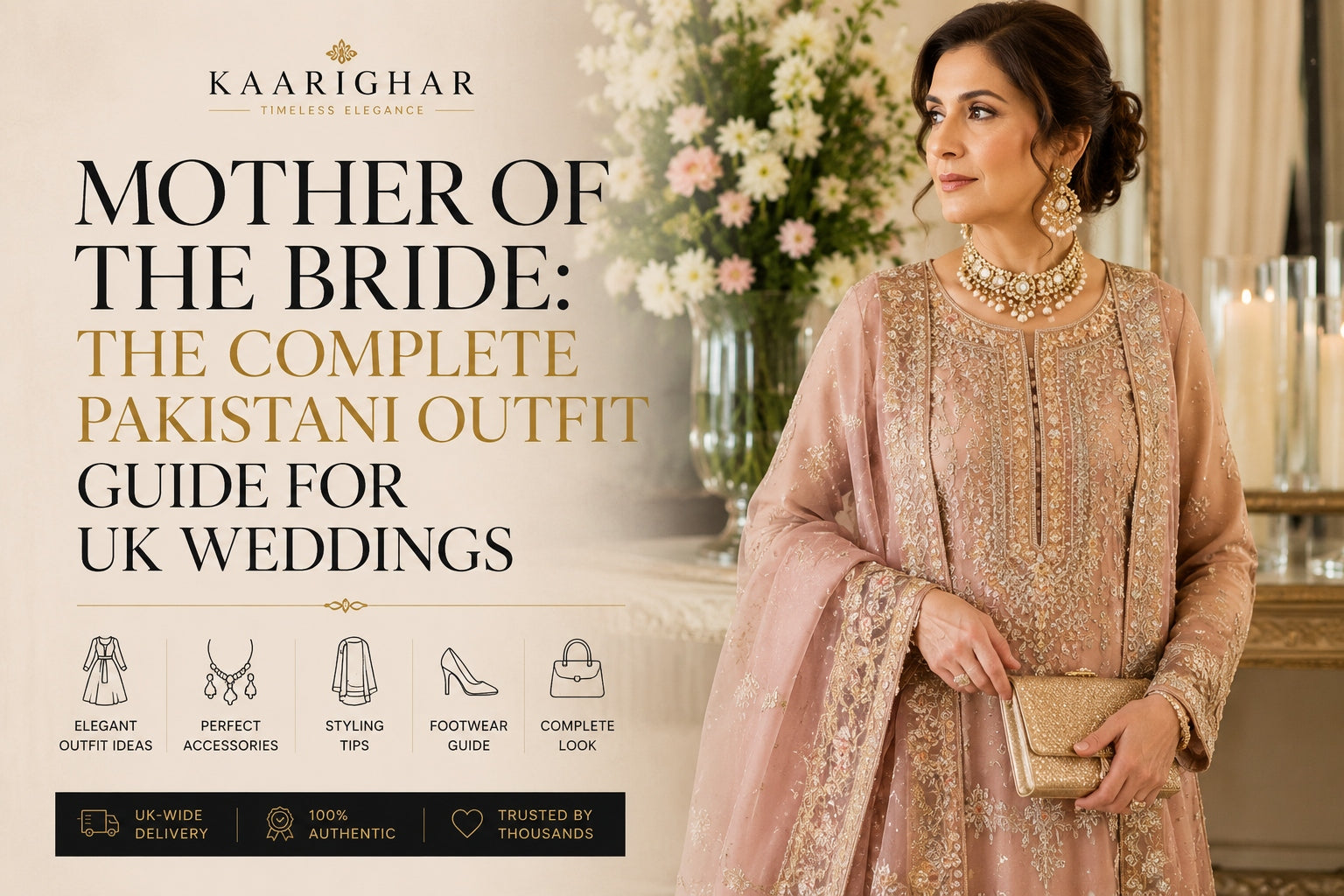
Mother of the Bride: The Complete Pakistani Outfit Guide for UK Weddings
Most wedding-outfit advice is written for the bride, the bridesmaids or the guests — and the mother of the bride is left to work it out on her own, usually while also managing caterers, family politics and a dozen other things nobody else is thinking about. It's an odd gap, because her outfits are some of the most photographed of the entire wedding, and she's expected to look elegant across three or four completely different functions without ever pulling focus from her daughter.
This guide is for her. We've put together practical, UK-specific guidance on what to wear, what to avoid, and how to shop for it without the usual trial and error.
Why Mother of the Bride Dressing Is Different
Dressing for this role isn't the same as dressing as a guest or a member of the bridal party. A guest can wear whatever suits their taste. The mother of the bride is dressing on behalf of the family — her outfit says something about the wedding's tone, and there's an unspoken expectation that she'll look polished and dignified without ever looking like she's competing with the bride, the groom's mother, or anyone else in the family photographs.
That balance is harder to strike than it sounds. Too plain and she risks looking like she didn't make an effort for her own daughter's wedding. Too elaborate and she risks overshadowing the bride, which is considered a genuine faux pas at most Pakistani weddings, particularly during the Barat and Walima. The outfits that tend to work best sit in the middle — rich fabric and considered detailing, but restraint in how much embellishment is layered on.
What to Wear for Each Function
Mehndi is the one function where the mother of the bride can lean into colour more freely. Yellows, oranges and greens are traditional, though many UK mothers now opt for richer jewel tones — a deep teal or burnt orange rather than the brighter, more youthful shades often worn by the bridal party. Comfort matters more here than at any other function, since Mehndi celebrations tend to run long and involve more standing and moving around.
Nikkah calls for something quieter and more modest — this is a religious ceremony first, and outfits with heavy embellishment or plunging necklines tend to feel out of place. A well-tailored shalwar kameez or an elegant Anarkali in a soft, muted colour usually works better than anything too ornate.
Barat is where formality peaks. This is the most photographed function of the day, and the mother of the bride's outfit here often becomes one of the defining images of the whole event. A structured, floor-length piece in a rich colour — deep maroon, emerald, or one of this season's moodier neutrals — with tasteful embroidery tends to photograph best without competing with the bridal party.
Walima is typically the most refined of the functions, and it's where a lot of UK mothers choose to wear their most elegant piece of the whole wedding. Pastels, ivories and soft metallics have become increasingly common here, particularly for evening receptions held indoors under warmer lighting.
This season's colours and silhouettes are shifting slightly function by function — richer neutrals are showing up alongside the traditional jewel tones, and formalwear generally favours cleaner lines over heavy, all-over embellishment, which tends to suit a more mature, considered look particularly well.
Colours and Etiquette Worth Knowing
A few unwritten rules are worth being aware of before you start shopping. White and ivory are generally reserved for the bride, particularly for Nikkah and Walima, so it's worth avoiding anything too close to bridal white even if the shade looks elegant on its own. If there are two mothers involved — from both families — it's common (though not obligatory) for them to loosely coordinate rather than match exactly, so a quick conversation beforehand can save an awkward moment on the day.
Beyond that, most of what applies to guest etiquette applies here too: avoid anything that could be mistaken for the bride's outfit, and be mindful of how bright or heavily embellished a piece is relative to the formality of the function.
Silhouettes That Work Well
Structured, floor-length shirts tend to be more flattering and more comfortable across a long day than anything too fitted or too short. A well-cut Anarkali, a straight-cut formal shirt with a fitted trouser, or a classic gharara all work well depending on your comfort with movement and how much time you'll spend standing versus seated.
If you're deciding between a gharara, sharara or a more structured formal shirt, our gharara vs sharara vs lehenga guide breaks down which silhouette suits which body type and which function, and it's just as relevant for mothers of the bride as it is for guests. It's also worth reading our guide on choosing the perfect Pakistani dress for your body shape, since the advice there on necklines, sleeve lengths and where embellishment sits is particularly useful when you're shopping for something you'll be wearing — and being photographed in — for hours at a time.
Getting the Dupatta Right
The dupatta tends to carry more weight in a mother of the bride's outfit than in a younger guest's — it's often the piece that photographs best, and a more classic, structured drape usually suits this role better than some of the looser, trend-led styles favoured by younger bridal party members.
Our dupatta draping guide covers both the traditional and more contemporary options, including which styles hold up best across a long day that moves between indoor and outdoor settings — a common feature of UK weddings, whatever the weather decides to do.
Accessorising Without Overdoing It
Jewellery is where a lot of otherwise well-chosen outfits get tipped into "too much." As a general rule, the more embellished the outfit, the simpler the jewellery should be — a heavily worked Barat outfit rarely needs a statement necklace on top of it. Gold or antique-finish sets tend to photograph better than anything too bright or reflective under indoor wedding lighting, and a single strong piece, whether that's a necklace, a set of jhumkas, or a jewelled hair accessory, usually looks more considered than layering several statement pieces at once.
Footwear is worth planning for too, particularly for the Barat, where several hours of standing is common. A low block heel or an embellished flat tends to hold up far better across a long day than anything too delicate, without compromising on how formal the overall look feels in photographs.
Fabric Choices for UK Weather
Because most UK weddings fall in the autumn and winter months, fabric choice matters as much as colour. Velvet and silk both photograph beautifully and hold their structure well in cooler temperatures, while chiffon and organza remain better suited to indoor evening functions like Walima, where warmth is less of a concern and drape matters more.
Where to Shop
Sana Safinaz is a strong starting point for this role — the brand's formal pieces tend to favour clean silhouettes and rich, considered embroidery over anything too maximalist. Our Sana Safinaz collection is worth browsing for Barat and Walima pieces in particular, and something like the Sana Safinaz luxury three-piece formal gives a good sense of the structured, elegant pieces that tend to suit this role well.
For a wider spread of formal options across price points, our luxury formals collection brings together pieces from several designers in one place, while our modest wear collection is worth a look for Nikkah outfits specifically, where a more covered silhouette is usually appropriate. If you're shopping for the Mehndi function, our broader Pakistani women's party wear collection has a wider range of colour and formality to choose from.
Frequently Asked Questions
What Should the Mother of the Bride Wear to a Pakistani Wedding?
The mother of the bride should generally aim for elegant, well-tailored pieces in rich fabrics — structured shirts, ghararas or Anarkalis work well — while avoiding colours or embellishment levels that could be mistaken for the bride's outfit, particularly white and ivory.
How Many Outfits Does the Mother of the Bride Need?
Most UK Pakistani weddings involve three to four functions — Mehndi, Nikkah, Barat and Walima — so the mother of the bride typically needs a separate outfit for each, with the Barat and Walima pieces usually being the most formal of the set.
What Colours Should the Mother of the Bride Avoid?
White and ivory are generally reserved for the bride and should be avoided, particularly for Nikkah and Walima. Very bright or heavily embellished colours that could rival the bridal party are also worth avoiding, especially for the Barat.
Should the Mothers of the Bride and Groom Coordinate Outfits?
It's common, though not obligatory, for both mothers to loosely coordinate their colour palettes rather than match exactly. A brief conversation between families before the wedding usually avoids any clashing on the day.
What Fabric Works Best for UK Wedding Weather?
Velvet and silk tend to work best for the UK's autumn-winter wedding season, holding their structure well in cooler temperatures, while chiffon and organza remain better suited to indoor evening functions like Walima.

Leave a comment
This site is protected by hCaptcha and the hCaptcha Privacy Policy and Terms of Service apply.